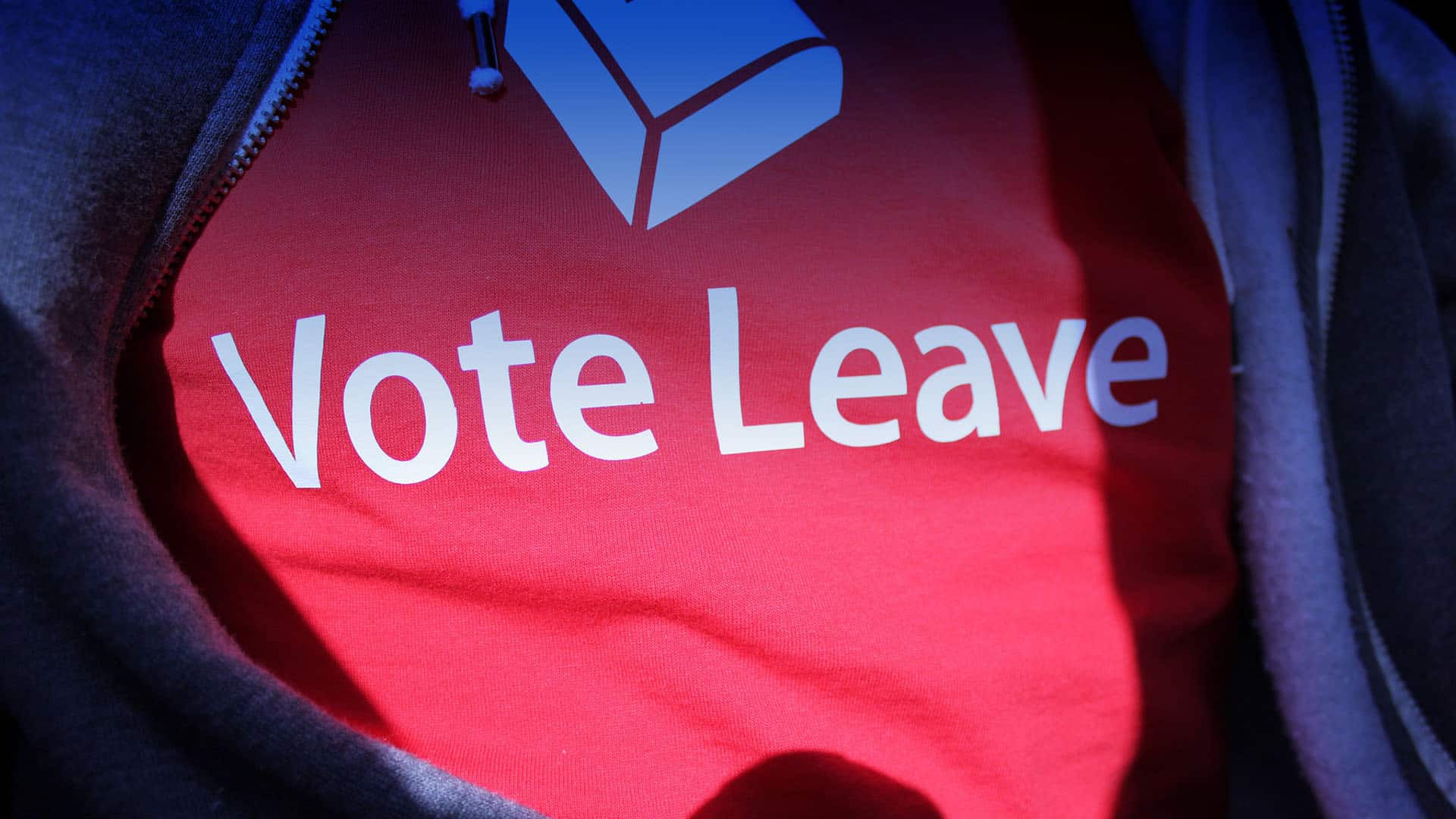

Ten years ago today, Britons voted in a referendum to leave the EU, a momentous decision following a narrow vote in support of breaking away (52% to 48%). Emboldened by the result of the 2014 referendum in which Scotland voted to stay in the UK (55% to 45%) and hoping to put to bed once and for all the civil war in the Conservative Party over membership of the EU, Prime Minister David Cameron, confident the nation would vote to remain in the EU, held the Brexit referendum he had promised.
Today, 56% support rejoining the EU (35% against), according to the polling group YouGov, and 22% of those who voted to leave now back returning to the bloc. Among young adults, the group most aggrieved by Brexit, 68% of respondents aged between 18 and 34 are in favour of rejoining, according to an IPSOS poll this month. Historically, voters tend not to change their minds soon after referendums. This has been the experience, with some fluctuations, in Canada, Scotland, Norway and Switzerland. Brexit would seem to be a notable exception.
Apart from ardently faithful Brexiteers, mainly concentrated in Reform UK and the Conservative Party, there is little support among the other parties for continuing to be outside the EU (see Figure 1). Public support for a closer relationship with the EU –without actually rejoining the bloc, the Single Market or Customs Union– stands at 70% (see Figure 2). Among Leave voters, 61% support a closer relationship.
Figure 1. Support for rejoining the EU by political party (%)
| Support | Oppose | |
|---|---|---|
| Green | 81 | 13 |
| Labour | 79 | 15 |
| Liberal Democrats | 77 | 18 |
| Conservative | 30 | 65 |
| Reform UK | 14 | 83 |
Figure 2. Support for a closer relationship with the EU by political party (%)
| Support | Oppose | |
|---|---|---|
| Green | 85 | 8 |
| Labour | 84 | 7 |
| Liberal Democrats | 84 | 9 |
| Conservative | 66 | 27 |
| Reform UK | 49 | 42 |
The Brexit referendum was a cipher for widespread anger and disillusionment among the public. One of my nieces voted Leave, because of the long NHS waiting list. The NHS England (population, 59 million) list stood at 3.8 million cases at the time of the referendum, surged to 7.7 million in August 2023, after the start of COVID in 2021, and five years on, with the pandemic long over, is around 7.1 million. The public health waiting list of Spain (population 50 million) is 4.9 million.
An immensely complex issue was supposed to have been resolved by a binary question (by its very nature simplistic) –and a victory for Leave to have set the UK on a path to greater prosperity and sovereignty– but the issue has not been resolved and the prosperity has not arrived.
Neither those who voted Remain or Leave are happy with the outcome. Remainers, because they feel more acutely the loss of the EU’s benefits, not the least the cherished freedom of movement (Brits are now in the longer non-EU queue at airports), and anger at the false claims (often outright lies) made by the Leave campaign, most famously the slogan on the side of the Leave campaign-bus asserting ‘We send the EU £350 million a week, let’s fund our NHS instead’. NHS England boss Simon Stevens called the figure an illusion. Another piece of disinformation was that Turkey was poised to join the EU and this would trigger a massive wave of Turkish immigrants.
Leavers are unhappy because Brexit, in their view, has been handled clumsily and not properly applied. Their arguments are redolent of communism’s true believers: ‘real communism was never tried’.
There is ample evidence to show Brexit’s negative impact since it came into force as of 31 January 2020, but the immediate recession predicted by the Treasury –dubbed ‘Project Fear’ by the Leave campaign– was misleading and did not happen. The impact from the COVID-19 pandemic, wars in Ukraine and Iran, and Donald Trump’s trade battles also cloud the picture. By 2025, Brexit had reduced UK GDP by between 6% and 8%, investment by between 12% and 18%, employment by 3% to 4% and productivity by 3% to 4%, according to Stanford’s Institute for Economic Policy Research (SIEPR).
That report identified four areas that affected the economy: a persistent increase in uncertainty, weighing on investment; lower expected demand for goods and services which affected investment and employment growth; lower innovation and IT investment that eroded productivity growth within companies and reduced productivity growth between firms as the more productive, internationally exposed firms were more negatively impacted.
As well as the hit on the economy, Brexit has wrought havoc with the Conservative Party. Cameron resigned after losing the referendum and was followed by four other Conservative Prime Ministers, one of whom, Liz Truss, lasted 49 days, having triggered a financial market meltdown. The last time the UK burnt through Prime Ministers at a similar rate was in decade-long stretches in the 18th (1760-70) and 19th (1827-37) centuries. There were seven Foreign Secretaries and seven Finance Ministers in seven years: just four of the latter in the 23 years before 2016.
As far as Leavers were concerned, Brexit was all about the central slogan of ‘taking back control’, particularly regaining control over the country’s borders. The ending of freedom of movement resulted in more EU citizens leaving the UK than arriving. In order to manage severe labour shortages in sectors such as healthcare and social care the government introduced a points-based system for EU and non-EU citizens alike. This saw net migration (immigration minus emigration) surge to 891,000 in 2022, well above pre-Brexit figures (see Figure 3). There was a big fall in EU net migration and a large increase in net migration from the rest of the world. Tighter requirements brought net migration down to 171,000 in 2025.
Figure 3. Net migration 2014-25 (1)
| Year | Net migration | Year | Net migration |
|---|---|---|---|
| 2014 | 309,000 | 2020 | 93,000 |
| 2015 | 329,000 | 2021 | 467,000 |
| 2016 | 252,000 | 2022 | 891,000 |
| 2017 | 249,000 | 2023 | 848,000 |
| 2018 | 276,000 | 2024 | 331,000 |
| 2019 | 184,000 | 2025 | 171,000 |
Had the UK stayed in the EU, theoretically, at least, it might have been possible to control better the small boat crossings from France, which increased significantly after Brexit. More than 200,000 illegal immigrants, many of whom make a claim for asylum, have landed on UK shores, usually in dinghies (see Figure 4). The 2013 Dublin Agreement gave EU countries a legal framework to return asylum seekers to the first EU country they entered, although, in practice, the system’s effectiveness was limited because of strict evidence thresholds and legal challenges. This agreement was replaced by the Asylum and Migration Management Regulation, which was due to come into effect this month.
Figure 4. Immigrants in small boat crossings, 2018-26
| Year | Number of people | Year | Number of people |
|---|---|---|---|
| 2018 | 299 | 2023 | 29,437 |
| 2019 | 1,843 | 2024 | 36,816 |
| 2020 | 8,462 | 2025 | 41,472 |
| 2021 | 28,526 | 2026 (until 15 June) | 9,852 |
| 2022 | 45,755 |
‘Global Britain’, the mantra quickly adopted by successive Conservative governments after the referendum and routinely repeated by British diplomats, suggested that the UK would not turn inward and become isolationist but would pursue an outward-looking trade and foreign policy. Yet leaving the EU, the UK’s largest trading bloc, has made ‘Global Britain’ an empty slogan. As a result, it was largely retired by Labour’s Foreign Secretary David Lammy in 2024 and replaced with ‘progressive realism’.
Brexit has diminished the UK’s overall strategic value to the US, as it no longer provides the same leverage within Europe. But by being free from the constraints of EU consensus policy, the UK is now more agile to coordinate specific actions with the US. For instance, the UK was able to take an early and proactive lead in supporting Ukraine against Russia, which was highly valued by Washington.
The impact of the new trade agreements –with New Zealand, Australia, the grouping around the Comprehensive and Progressive Trans-Pacific Partnership (with whose members the UK mostly had free-trade agreements), and India (not yet in force)– is judged by the government’s own assessments to be small relative to the negative impact on UK-EU trade. Why would a small exporter who had found a successful niche in the EU go to all the trouble and expense of trying to break into one of these far away non-EU countries? Furthermore, the much-touted UK-US deal, agreed in May 2025, has delivered little in practice so far. As for the currency, the pound has never returned above its pre-Brexit level, hitting British holidaymakers in the pocket. From close to US$1.50 against the US dollar and €1.31 against the euro just after polling closed, pound sterling stands at US$1.34 and €1.16.
Post-Brexit trade with the EU is governed by the Trade and Cooperation Agreement, which replaced Single Market and Customs Union membership. This allows for tariff-free and quota-free trade in most goods, but introduced significant non-tariff barriers, such as customs declarations, rules of origin checks, and regulatory divergence. The ending of seamless, frictionless trade created a headache for companies, particularly small firms which have been more adversely affected. An estimated 16,000 to 20,000 small UK businesses have stopped exporting to the EU because of paperwork, VAT issues and the increased cost of logistics (employing people to manage cross-border red tape). Estimates suggest goods trade is 10% to 15% lower than it would have been if the UK had remained in the EU. UK services exports, on the other hand, have done unexpectedly well.
Where does the UK go from here? The Labour government aims to deepen trade and security ties in its reset with the EU but without rejoining the Single Market, the Customs Union or allowing free movement of people. It has agreed to rejoin Erasmus+ from 2027, extended existing fishing rights and allocations for 12 years and entered advanced technical negotiations aimed at a sanitary and phytosanitary agreement to cut export costs and red tape.
The red lines severely constrain what can really be achieved. Brussels is adamant there will be no cherry-picking; it would send the wrong signal to any other EU country thinking of going down the UK’s route. It is a safe bet that Spain will not opt for ‘Sprexit’. Support for the EU remains high (see Figure 5).
Figure 5. Taking everything into account, would you say your country has on balance benefited from being a member of the EU?
| Country | % |
|---|---|
| France | 58 |
| Germany | 74 |
| Italy | 64 |
| Spain | 82 |
The Spain-UK trade relationship has fared reasonably well since Brexit. Spain is the seventh largest trade partner overall. Exports of services rose 51% between 2016 and 2025 from £7.8 billion to £11.8 billion, while goods increased by only 10% to £10.6 billion. Both sides are keen to maximise services through jointly working on mobility (mutual recognition of professional qualifications, short-term business mobility, etc).
Imports of goods from Spain rose 44% to £22.6 billion and services 61% to £23.3 billion. Economy Minister Carlos Cuerpo and his counterpart Rachael Reeves chaired the first meeting of the UK-Spain Trade and Investment Dialogue in March. The stock of UK foreign direct investment (FDI) in Spain stood at £87.8 billion in 2024 (latest figure), 6.6% lower than in 2023, and the stock of Spanish FDI in UK was £35.6 billion, 6.1% higher. UK tourists continue to flock to Spain (4.1 million in the first five months, followed by France with 2.2 million), but student numbers are down. Those studying in the UK have roughly halved since 2016-17 to around 6,000 in 2024-25 and Brits in Spain from an estimated 6,000 to 7,000 to 2,000 to 3,000.
Polls show that the pro-Brexit Reform UK would be the largest party if there was a general election today, but short of an overall majority. Whatever the Labour government might be able to achieve by the time of the next election in its EU reset runs the risk of being undone by Reform if it formed the next government or was part of it. All in all, a mess.