

Executive summary
The Elcano Global Presence Index confirms China’s sustained rise within the international system over recent decades. The advance has been driven primarily by the economic dimension, which constitutes the core of its external projection, although in the past decade its military presence has grown significantly as well. The resulting pattern reflects a comprehensive expansion strategy, grounded on a robust economic base and an increasingly visible security component.
The geographical distribution of this projection reveals two central features. First is the priority granted to its immediate neighbourhood, particularly in Asia-Pacific, where China has consolidated its position as a dominant actor. The second is a risk reduction strategy based on diversifying partners and markets, aimed at mitigating vulnerabilities stemming from tensions with the main Western powers.
In this context, China has reduced its relative exposure to the US, the EU and Japan, while strengthening ties with the so-called Global South. However, the reorientation is not uniform. Its presence is firmly consolidated in Asia Pacific, followed by Latin America, while developments in Africa and the Middle East have been more moderate and uneven.
Looking ahead, the outlook is uncertain. The year 2024 marks the first instance of a decline in China’s global presence, both in absolute and relative terms. The shift may signal a turning point in China’s expansionary trajectory or, alternatively, a cyclical correction within a longer-term process.
This Policy Paper raises relevant questions regarding China’s international trajectory, as well as the global or regional character of its power. It is hoped that it will provide robust data and evidence on the evolution of globalisation and multipolarity.
Introduction
It is well known that the process of globalisation over recent decades cannot be understood without the rise of Asia, particularly China, and the gradual shift of the centre of gravity of the world economy towards the Pacific. The rise has been underpinned by an export-oriented development strategy and rapid technological advancement that, through an active role of the state, has profoundly transformed China’s productive structure. From its initial strategies aimed at attracting offshoring industrial processes in segments of lower value-added, China has progressively consolidated its productive capacities through learning and technological development, combined with an active industrial policy that has enabled it to move into higher value-added activities and even to attain leadership in more advanced technologies, challenging the traditional primacy of the US, the EU and Japan.
China’s political and economic model also shapes its conception of the international order, which is markedly state-centric and post-Westphalian. Within this framework, sovereignty and political control occupy a central position, in contrast to the neoliberal paradigm that accords greater primacy to markets and private actors and, consequently, a more diffuse role to the state (Esteban, 2025). China’s trade surplus provided it with growing capacity for external financing, partly directed towards the US debt market, thereby strengthening a trade and financial interdependence between the two that until recently was understood as a mechanism of international security. However, as this interdependence deepened, and China moved up the more technologically advanced segments of global production chains, the logic has evolved from predominantly cooperative, into direct rivalry with the US, with implications for the EU, and towards the development of strategic autonomy (Esteban & Otero, 2025).
Contemporary globalisation is therefore characterised by increasing fragmentation and geostrategic rivalry (Gracia & González, 2025). Rather than a homogeneous global space, the world economy is increasingly structured around distinct regional integration areas that, in addition, were already the centripetal forces of globalisation as previously understood, alongside a form of governance extended to their respective spheres of influence.
The gap between countries’ actual external projection and the interest-driven narratives surrounding their expansion and influence is one of the key elements for understanding the new international order. Against this backdrop, this paper examines the evolution of China in the Elcano Global Presence Index, providing geographically disaggregated data with the aim of identifying with precision how China articulates its relations with different world regions and how these outcomes align with the priorities declared in its foreign policy strategy. From this perspective, it is pertinent to ask to what extent China is truly a global power (as opposed to a regional one), whether it has increased its projection in a homogeneous manner in all regions, and whether this projection follows similar patterns across the globe. This paper builds on previous exercises focusing on the US (Olivié & Gracia, 2024) and the EU (Olivié & Gracia, 2020), thereby completing a geographical analysis of how the main protagonists of the globalisation process over recent decades have articulated their global presence.
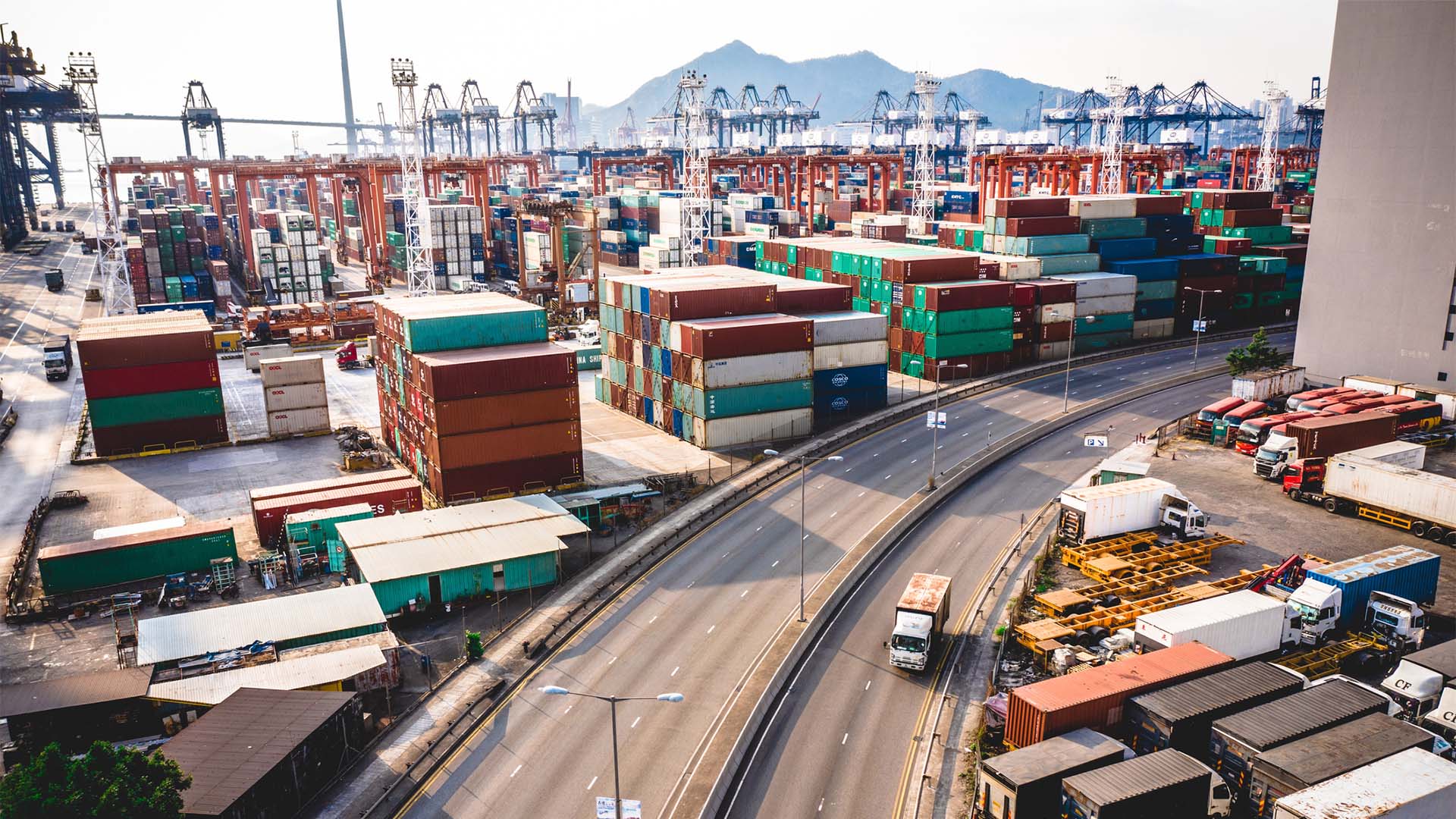
Image: View of a port area in Kowloon, Hong Kong, China. Photo: Chunyip Wong / Getty Images.