
Main messages[1]
- South-East Asia is emerging as an increasingly important hub in global critical mineral supply chains. The region sees these resources as drivers of development and economic transformation, whilst also offering a source of strategic leverage.
- Governments are turning to a mix of restrictive measures and incentives to capture value from the rising demand for critical minerals, while strengthening long-term resilience. At the ASEAN level, there is a growing push to strengthen coordination, align policy frameworks and harness the region’s collective weight.
- International engagement is increasingly oriented towards diversification. The region is actively pursuing partnerships with external actors, while capitalising on current demand and competition to position itself as a key enabler of supply chain resilience.
- There is an asymmetry between South-East Asia’s growing strategic relevance and the level of EU policy attention, despite signs of increasing interest. There is scope to align EU priorities with regional agendas through a more structured approach at both the national and regional levels.
Analysis
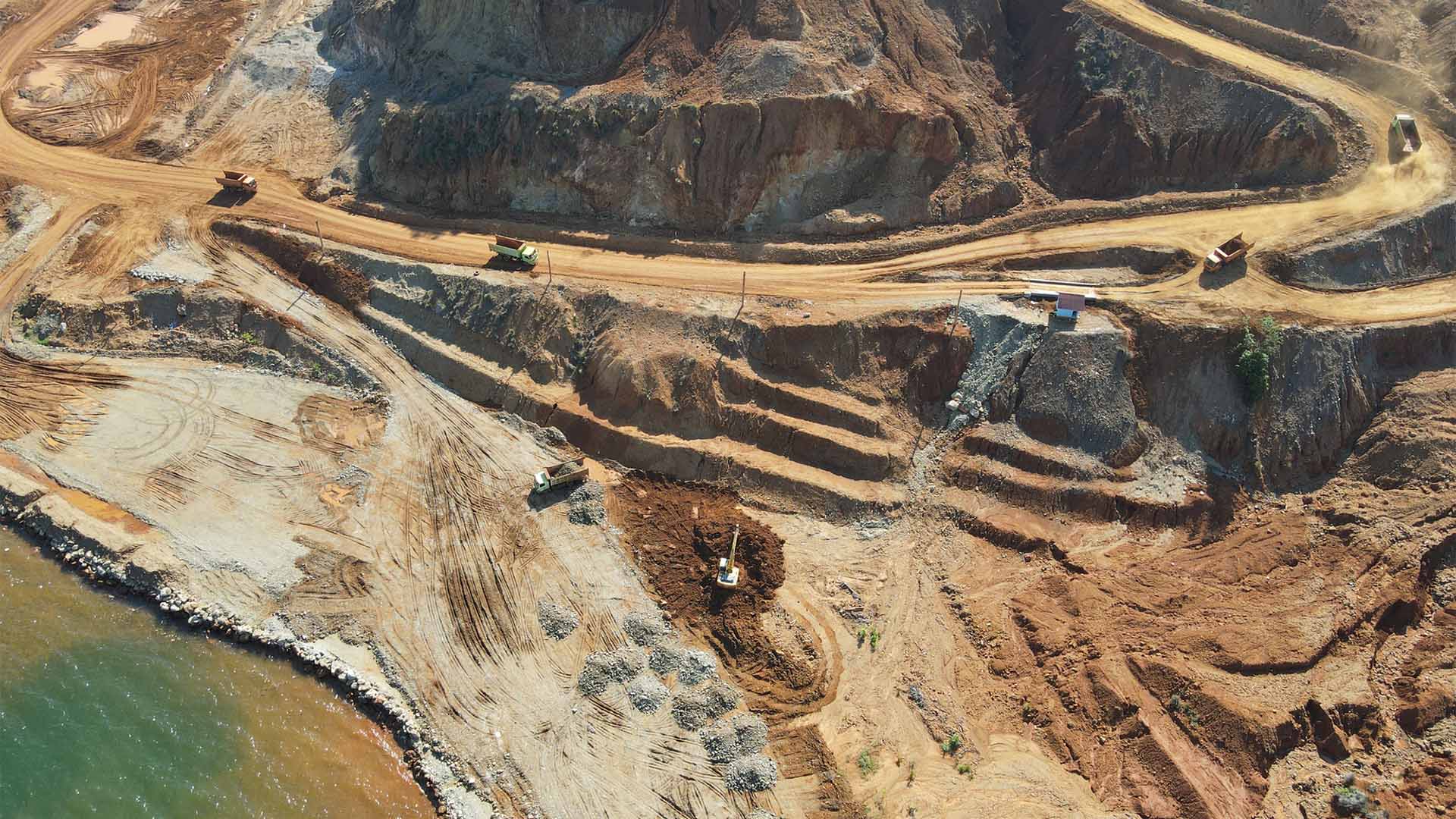
ASEAN is becoming a key player in the emerging politics of critical minerals. The region accounts for around 26% of global exports and holds particularly dominant positions in minerals linked to the energy transition. Indonesia and the Philippines together produce approximately 72% of global nickel and 14% of global cobalt output. In bauxite, Indonesia and Vietnam account for a relatively modest 3% of output but hold 20% of the world’s reserves.
The region’s importance is also becoming increasingly pronounced in rare earths. Myanmar has rapidly expanded its role, increasing its share of global production from just 0.2% to 16% in the last decade and supplying roughly 45% of key heavy rare earths such as dysprosium and terbium. Vietnam holds the world’s sixth-largest reserves, while Malaysia, despite limited mine production, has emerged as a key processing hub through the Lynas facility, which sources feedstock from Australia. Estimates of Malaysia’s role vary from around 11% of total rare earth processing in government assessments to about 4% of refined magnet rare earths according to the International Energy Agency (IEA). The IEA also identifies the country as one of the fastest-growing players in this segment, with the potential to reach 9% of global output within five years. Continued investments in mining and processing, alongside a stronger industrial policy focus on the energy and digital transitions, underscore South-East Asia’s increasing importance.
As demand grows and critical minerals move to the centre of geopolitical competition, the region increasingly aims to position itself as a prominent actor in this domain. Approaches and levels of engagement vary widely, ranging from conflict-driven and largely unregulated contexts such as Myanmar to interventionist models such as Indonesia. Among the more active players, recent policy trajectories point to a deliberate effort to leverage the growing demand for critical minerals in support of broader economic and strategic objectives. National efforts are reinforced by ASEAN-wide initiatives to enhance policy coherence while projecting the region as a reliable partner for supply-chain diversification. Overall, this forms part of ASEAN’s renewed geoeconomic focus, formalised through the 2025 Geoeconomic Task Force and its upcoming institutionalisation into a permanent structure to advance resilience and a more effective use of regional assets.
Against this backdrop, this paper examines the rise of critical minerals as a policy priority in South-East Asia, unravels recent developments at both national and ASEAN levels, and assesses the growing role of these resources in the region’s diplomatic agenda. It concludes by evaluating the scope for EU engagement with South-East Asia, highlighting the case for more structured cooperation.
Opportunity and vulnerability in South-East Asia’s critical minerals sector
In South-East Asia critical minerals are generally framed as a source of strength, offering opportunities for industrialisation and geopolitical leverage. Although mining is not new to the region, the sector is experiencing a renewed momentum, supported by projections that identify it as one of the main drivers of growth, with an estimated market value of US$110 billion by 2040. This optimism is reflected in political discourse, which increasingly portrays critical minerals as an important pillar of national development, anchoring long-term economic transformation. Across the region, and especially in Indonesia, this is accompanied by an assertive rejection of the traditional model centred on the extraction and export of low-value raw ores and by a push to retain more value domestically through processing, refining and the export of higher-value mineral products such as ferronickel, nickel matte and battery-grade inputs. This reflects a renewed determination to move beyond a longstanding pattern of structural inequality in which resource-rich countries capture only a limited share of the value generated by their mineral endowment.
Alongside this development narrative, the geopolitical dimension is increasingly central in regional discourse, though not necessarily perceived negatively. Current disruptions in global supply chains are seen, if effectively leveraged, as a potential accelerator of economic and industrial objectives. In this context, South-East Asian countries are seeking to capitalise on the intensifying global competition over critical minerals by positioning themselves as key partners in supply and processing, as well as hubs for advanced manufacturing. This framing has been echoed at the ASEAN level, where leaders have described the evolving context as providing an opportunity to enhance the region’s political relevance and role as an ‘enabler of supply chain diversification’. At the same time, critical minerals are increasingly understood as a potential source of bargaining power vis-à-vis major partners, including in trade negotiations. The 2025 ASEAN Geoeconomics Report stresses the need to adapt to the more strategic use of economic tools by external powers, while leveraging ASEAN’s own strengths in niche areas such as critical minerals.
This overall sense of opportunity has been tempered by a more cautionary rhetoric. In Indonesia, President Subianto warned that the country’s vast resources can be a ‘curse’ if not managed well, as external actors will inevitably seek to secure access, leaving resource-rich nations potentially undermined. More broadly, there is an awareness of the region’s structural constraints, including limited processing capacity, technological gaps and shortages in human capital, which may hinder its ability to harness its resource potential. Together, this dual perception of opportunity and risk underpins regional strategies aimed at maximising value capture while tightening oversight of the sector, alongside a more active engagement with external actors to advance domestic capacity.
Towards upgrading in global value chains
Critical minerals governance in South-East Asia is increasingly oriented towards greater oversight and value retention. Within ASEAN, Indonesia, Vietnam, Malaysia and, to a lesser extent, the Philippines stand out for their proactive approaches, although national strategies differ in pace and intensity. In recent years, these countries have expanded their regulations, combining restrictive measures and incentives. Initiatives include export restrictions aimed at encouraging domestic processing, sectoral roadmaps, targeted incentives to attract investment in higher-value activities and improved governance and oversight mechanisms.
One of the clearest expressions of this shift towards value addition has been the use of export restrictions to encourage domestic processing. Indonesia has built on earlier export restrictions introduced by banning unprocessed nickel and bauxite in 2020 and 2023, while Malaysia and Vietnam have more recently introduced bans on raw rare earths. These measures have been accompanied by a broader wave of new policies, reforms and investment promotion efforts. By contrast, the Philippines has adopted a more cautious approach. After lifting two moratoriums to revive the mining industry in 2021, Manila ultimately abandoned proposals for an ore export ban last year, instead relying on tax incentives and royalty adjustments to attract investment, support exploration and technological upgrading, and increase revenues.
Beyond trade restrictions, broader efforts to develop the sector have also involved measures to strengthen strategic planning and institutional oversight. Various countries in the region have recently updated their national mining strategies and some have also introduced critical mineral classifications to guide policy priorities. In some cases, particularly in Indonesia, this has been coupled with measures to consolidate the central government’s control and oversight, including through licensing centralisation, the introduction of traceability mechanisms, and the creation in 2025 of a dedicated Mineral Industry Agency to support research and technology transfers. These developments reflect the sector’s rising strategic importance, including its implications for technological and defense self-reliance, as illustrated by discussions in Vietnam about reserving specific deposits for defence and security purposes.
As part of the broader push on critical minerals, rare earths have taken on a particular prominence, prompting more targeted efforts to develop the sector. In Malaysia, earlier initiatives such as its 2014 blueprint for rare earth-based industries have been reinvigorated through resource assessment efforts and a dedicated business model for the sector. More recent developments in Vietnam and Indonesia point to growing efforts to strengthen state capacity around the governance and development of rare-earth resources. In Vietnam the emphasis has been on planning and oversight, with last year’s legal amendments to strengthen state authority over rare earths now coupled with efforts to develop a dedicated agency and a national strategy. Indonesia has recently moved more directly towards resource development through the creation of a state-owned enterprise for mining rare earths, alongside the identification of priority mining areas and the launch of new research initiatives.
More broadly, critical minerals are increasingly being mobilised in support of industrial upgrading and the development of domestic technological capabilities. Across the region, governments are seeking to link resource extraction more closely to higher value industrial activities. This ambition is reflected in initiatives such as Malaysia’s ‘mine to magnet’ approach, its roadmap for advanced materials as well as its Industrial Masterplan. In Vietnam these efforts are tied to a renewed focus on science and technology under President To Lam, with rare earths identified as a strategic technology priority for supporting key industries such as semiconductors. Within Indonesia’s downstreaming agenda, a central priority has been the development of an integrated electric vehicle (EV) ecosystem, supported by measures promoting domestic utilisation of critical minerals and the creation of a new sovereign wealth fund to finance critical industries.
National efforts are increasingly complemented by a more integrated regional approach. While regional cooperation on mining has been institutionalised since 2005 through regular sectoral dialogues and action plans, it has recently gained renewed momentum. ASEAN has positioned sustainable minerals development as a pillar of its economic agenda while seeking to strengthen the region’s role in global value chains. These priorities are reflected in the ASEAN Minerals Development Vision, adopted in 2025, which sets out a broad 20-year roadmap for the sector.
Recent initiatives reflect two core objectives: (a) to increase ASEAN’s attractiveness as an investment hub through practical facilitation tools, including better data quality and availability and the establishment of new platforms to promote investment and public-private dialogue; and (b) to strengthen regional coordination and coherence, while ensuring sustainability, notably through efforts to establish a common framework for responsible exploration, extraction and processing. The development of a regional roadmap for critical minerals, to be finalised this year, further signals ASEAN’s intent to strengthen its collective positioning and adopt a more strategic approach. Overall, these initiatives reflect sustained political attention, alongside a clearer shift towards more comprehensive and aligned policy frameworks. However, their effectiveness will depend on the extent to which diverse national interests and uneven levels of development can be reconciled into more coherent and coordinated approaches.
Managing risk and opportunity in an increasingly contested geopolitical landscape
Given the region’s structural constraints, cooperation with external partners is understood as central to South-East Asia’s strategies at the national and ASEAN levels. Critical minerals are increasingly embedded in the region’s diplomatic agenda, with a focus on advancing joint research, facilitating technology transfer and promoting a more sustainable mineral development, including through policy alignment and knowledge exchange.
These efforts unfold in a complex geopolitical environment shaped by China’s central role in critical mineral value chains, its readiness to weaponise dependencies and parallel efforts to reduce this exposure. South-East Asia’s approach is largely pragmatic, based on the perception that strategic autonomy ultimately hinges on advanced technology and expertise, making partnerships with external actors, including China, necessary. Countries like Vietnam are therefore actively pitching collaboration to Beijing in minerals research and technology transfer, while Indonesia’s recent high-level interactions with China have resulted in more structured cooperation frameworks on minerals. Active engagement is also reflected in ongoing discussions between Chinese firms and partners in Vietnam and Malaysia, including over access to rare earths processing technologies.
At the same time, there is growing awareness within ASEAN of the risks associated with dependence, particularly amid an increasing scrutiny of China’s role in mineral supply chains. The region’s critical minerals exports remain heavily oriented towards the country, which absorbs 75% of the total. The Indonesian case further exposes structural dependence on China. Efforts to localise processing have significantly increased the country’s share of nickel production, but this expansion has relied heavily on Chinese-led projects. According to the IEA, companies from China control around 40% of nickel production, compared with roughly 10% for Indonesian firms. Similarly, while refined nickel supply is geographically concentrated in Indonesia, 75% of its refining capacity is estimated to be Chinese-owned. This concentration could increase Indonesia’s exposure to geopolitical pressures, potentially complicating diversification efforts in a more contested geopolitical environment, a risk that has already raised concerns in Jakarta.
In this context, efforts to cooperate with the US have become more visible, accelerating during the Trump Administration. This has translated into dedicated cooperation frameworks with ASEAN countries and their participation in initiatives such as the Critical Minerals Ministerial in February 2026. Critical minerals also featured in the region’s Agreements on Reciprocal Trade (ARTs), especially with Indonesia, where the issue is addressed in a dedicated section. The Philippines has been particularly active in pursuing an engagement with the US, while positioning itself as an alternative to China-dominated supply chains, in line with its broader push to strengthen its alliance with Washington amid growing tensions with Beijing. In April 2026 Washington and Manila agreed on an Economic Security Zone, a 4,000-acre high-tech industrial hub established under the Pax Silica alliance, which intends to leverage on mineral resources and advance technological manufacturing. Yet even in this case, the Philippines remain dependent on the Chinese market, which absorbs around 90% of its nickel exports and, despite its rhetoric, Manila has also continued to seek Chinese investment in the mining sector, including in nickel and copper.
The growing centrality of critical minerals in Washington’s engagement with South-East Asia reflects both their prioritisation in US foreign policy and the region’s efforts to strengthen and diversify partnerships. Recent agreements with the US are viewed as recognition of the region’s successful positioning amid global competition, while supporting domestic objectives to build capacity and capture greater value. However, they also highlight the sector’s increasing sensitivity. In Malaysia and Indonesia the ARTs with the US drew criticism over provisions perceived as limiting these countries’ ability to impose export restrictions on unprocessed minerals. While both governments rejected these claims, the debate underlined the importance of maintaining a balanced approach to the US and China to preserve their credibility and ensure the sustainability of their strategies.
To mitigate the geopolitical backlash, individual countries and ASEAN are expanding their international engagement on critical minerals with partners such as Japan, Korea and Australia. This issue is increasingly embedded in broader frameworks and complemented by targeted MoUs covering areas like technical cooperation, rare earths and EV value chains. In parallel, more structured cooperation mechanisms are also emerging, including dedicated dialogues and, in the case of Korea and Vietnam, the establishment of a joint Critical Minerals Supply Chain Center.
At the regional level, critical minerals are also increasingly identified as a priority sector in ASEAN’s external relations, with a strong focus on capacity-building and support for ASEAN-led initiatives. Commitments to cooperate are reflected in Plans of Action and joint declarations, including dedicated sections in the frameworks with China, Australia, Japan and Korea. More targeted initiatives have emerged within the ASEAN+3 framework, encompassing China, Japan and Korea, which has developed a clearer roadmap for cooperation in the mining sector. These countries have also shown more active efforts to engage ASEAN as a whole, including through targeted projects such as Korea’s US$5 million critical minerals initiative focused on capacity-building, training and database development.
This political dynamism is mirrored by increased private-sector activity across the value chain. In Malaysia, Lynas has renewed its operating licence for 10 years, and is expanding its footprint through investments in a new rare earth separation facility and a US$142 million super magnet manufacturing project with Korea’s JS Link. While still sourcing feedstock from Australia, Lynas recently reached an MoU with the Kelantan regional government to develop local processing of rare earth deposits. Vietnam has similarly attracted growing interest from international investors in rare earths, with new processing projects, including by Korea’s LS and Lynas, and increased investment to expand the capacity of existing plants. In Indonesia, investment has been particularly pronounced in downstreaming, with a nearly US$6 billion EV battery industry ecosystem launched in 2025 by a consortium of Indonesian and Chinese companies, followed by an additional project expected in the coming months.
Figure 1. Frameworks of critical minerals with selected partners
● Explicit critical minerals agreement or cooperation framework
○ Critical minerals included within broader bilateral or multilateral declarations
| EU | US | Japan | Korea | China | Australia | |
|---|---|---|---|---|---|---|
| Vietnam | ○ Joint statement (2026) | ● Technical cooperation on rare earths MoU (2023) | ○ 7th Committee on Industry, Trade and Energy ministerial statement (2024) | ●● Critical minerals supply chain joint research MoU (2023); Supply chain centre (2025) | ○ Leaders’ joint statement (2025) | ○● Leaders’ joint statement on the CSP; Ministerial energy and minerals dialogue (2024) |
| Malaysia | ●○ Critical minerals MoU; ART (2025) | ● Rare earth and other mineral resources MoC* (2025) | ○ Foreign Ministers’ joint statement (2025) | |||
| Indonesia | ○ CEPA (2025) | ●○ Sustainable Energy and Minerals MoU (2023); ART (2026) | ●● Green mineral cooperation MoU; Mineral resources MoU (2024) | ○● EV cooperation MoU (2023); Critical minerals MoU* (2024) | ||
| Philippines | ○ Trilateral Joint Vision Statement (2024) | |||||
| ● Critical Minerals MoU (2026) | ● Mining sector MoU (2023) | ●● Supply chain minerals MoU (2024); Cooperation in Critical Minerals MoU (2026) | ||||
| ●○ ASEAN+3 Minerals Cooperation Work Plans; ASEAN+3 Leaders’ Statement on Developing the EV Ecosystem (2023) | ||||||
| ○ Plan of Action (2023-27) | ○ Joint Vision Statement (2025) | ○ Implementation Plan of the Joint Vision Statement (2023) | ○ Plan of Action (2026-30) | ○ Plan of Action (2026-30) | ○ Plan of Action (2025-2029) | |
Prospects for EU-ASEAN cooperation on critical minerals
South-East Asia’s resource base and policy trajectory point to growing strategic importance and a stronger ambition to position the region as a key player in critical minerals. In parallel, this issue has also moved to the centre of the EU’s economic security agenda, with a focus on securing resilient supply chains. Partnerships have become a key component of this approach. In Asia-Pacific this has translated into cooperation with countries like Australia, Japan and Korea. Yet the presence of ASEAN and individual South-East Asian countries in the EU’s raw materials diplomacy has been limited.
This gap partly reflects frictions around this issue, rooted in differing conceptions of critical minerals, as a vehicle for development and industrialisation in ASEAN and as a matter of supply security for the EU. Recent developments, however, point to a degree of pragmatic adjustment in how these differences are managed. Indonesia’s nickel export ban strained relations, leading to a WTO dispute. Despite a favourable WTO ruling, which Indonesia subsequently appealed, Brussels ultimately chose to prioritise continued engagement through Comprehensive Economic Partnership Agreement (CEPA) negotiations. Commission President von der Leyen presented the CEPA as supporting diversification and a more stable and predictable supply of critical raw materials. This forms part of the EU’s broader effort to incorporate raw materials into its trade agreements, an approach that is also being pursued in ongoing FTA negotiations with Malaysia, Thailand and the Philippines.
Beyond these frameworks, there is scope to broaden the EU’s engagement in ways that align its economic security approach more closely with South-East Asian priorities at both bilateral and regional levels. This entails an agenda that goes beyond a narrow focus on access to minerals towards cooperation on governance, sustainability and support for the region’s cababilities. At the bilateral level this could involve expanding critical raw materials diplomacy to develop partnerships with key producing countries in South-East Asia. More sustained engagement could enhance transparency and predictability, particularly given the region’s increasing relevance for global supply chains. As the IEA notes, developments in countries such as Indonesia have significant implications for the supply and prices of key critical minerals.
During von der Leyen’s visit to the Philippines in 2023, the Commission President proposed actions to develop the country’s mining industry, focusing not only on extraction but on technology transfer, knowledge exchange and supply chain security. This approach, grounded on the development of domestic capabilities, is broadly consistent with the region’s priorities and is beginning to translate into concrete cooperation. In 2025 the EU and the Philippines announced a scoping study to identify potential critical minerals, promote best practices and attract European investment. Similarly, the 2026 joint statement upgrading EU-Vietnam relations to the level of Comprehensive Strategic Partnership (CSP) reflected shared interest in critical raw materials, including by promoting trade and investment as well as sustainable mining and processing. Continuing along this line of engagement, which refrains from an overly geopolitical framing, is likely to resonate better with the region. South-East Asian countries remain generally cautious towards frameworks perceived as signalling alignment. Although this sensitivity may be diminishing, as suggested by broader participation in the 2026 US ministerial than in earlier initiatives, concerns about being drawn into wider geopolitical competition remain.
At the regional level, ASEAN also offers a useful framework to structure and maximise EU efforts. Mining has been part of the ASEAN agenda for over two decades, allowing the organisation to act as a facilitator for cooperation with external partners. The current EU-ASEAN Plan of Action (2023-27) briefly mentions cooperation on supply chain resilience in critical raw materials and both sides have further identified this issue, alongside digital trade and green technologies, as priority areas for engagement. However, joint activity in the critical minerals sector has so far remained underdeveloped, despite growing dynamism on both sides. More explicit attention to the sector emerged in the EU-ASEAN joint statement of April 2026, where ministers expressed a clearer interest in advancing meaningful cooperation in minerals development. There is now scope to build on this commitment, particularly in light of ongoing work to update the Plan of Action and efforts to upgrade relations to the level of CSP in 2027.
ASEAN has identified a range of priority areas for engagement with external partners, providing a basis to explore synergies and guide future joint initiatives. A 2022 report by the ASEAN Secretariat identified EU projects of interest to ASEAN, including PanAfGeo programme, focused on technical training and improving geological knowledge in Africa and the EU-Latin America Mineral Development Network Platform, designed to facilitate information sharing, dialogue and the promotion of sustainability standards. Similarly, ASEAN’s current Minerals Cooperation Action Plan identifies areas for engagement with external partners, including investment facilitation, the use of innovative mining technologies, the implementation and monitoring of sustainability frameworks, and the exchange of best practices in governance, including in emerging areas such as offshore and deep-sea mining. Taken together, these priorities point to convergence between ASEAN’s interests and the EU’s initiatives, providing a basis for future cooperation.
Building on this convergence will require the EU to position itself clearly in an increasingly crowded landscape, marked by growing engagement from a wide range of external actors. This increases the importance to demonstrate tangible added value, especially given the region’s perceptions that earlier promises have not been fully met. The Global Gateway, which was precisely intended to showcase the EU’s capacity to mobilise resources, has often been perceived in South-East Asia as overpromising and underdelivering. To be seen as a relevant partner, the EU will therefore need to show consistency and a willingness to put resources behind its offer, including through financing and investment.
Moreover, in supporting regional efforts, the EU can also draw on relevant expertise in critical minerals, including its experience in developing region-wide frameworks for the sector, an area that also aligns with its longstanding record of supporting ASEAN regulatory and institutional development. It also has technical capabilities that could support the the region’s efforts more directly. One example is the Copernicus for Earth observation, where cooperation initially developed with the Philippines is now being expanded to the wider region. Pilot projects using Copernicus data in Europe illustrate its potential to support environmental monitoring of mining activities, faster and more cost-efficient mineral mapping and exploration, as well as risk mitigation and infrastructure maintenance. More tailored forms of technical cooperation and training in these areas could help leverage EU capabilities while supporting regional priorities in the mining sector.
Conclusions
South-East Asia’s approach to critical minerals reflects a growing dynamism across the value chain and a clearer ambition to strengthen its strategic positioning. However, it is still unclear whether current policy efforts can effectively address structural constraints and unlock the region’s resource potential. Likewise, ASEAN’s ability to exercise collective weight will depend on its capacity to reconcile diverse interests and uneven levels of engagement in the sector. Despite these challenges, the evolving landscape creates a scope for more structured and sustained EU-ASEAN cooperation. Aligning EU engagement with regional development priorities will be key to positioning the EU more effectively in a region of increasing strategic importance.
[1] The autor would like to thank Mario Esteban and Judith Arnal for their comments, which have substantially improved the analysis.