
One of the pressing tasks facing the new government that emerges from the snap general election on 29 November will be to find ways to encourage more women to have children. The latest fertility survey by the National Statistics Institute (INE) shows that one in six women in 2025 did not want to have children compared with one in eight in 2018. This is a particularly significant change as the female population in 2025 was 1.3 million higher than in 2018.
Spain’s fertility rate of 1.1 is one of the lowest in the world, less than half the replacement rate of 2.1 needed to sustain the current population. But for the huge influx of immigrants since 2000, Spain’s population would have dramatically shrunk. The foreign-born population exceeded 10.3 million in July (20.7% of the total population), up from around one million in 2000 (2%). The Socialist-led minority government’s amnesty earlier this year for immigrants without the papers needed to live and work legally in Spain attracted 1.2 million people to apply, more than double the official estimate.
Almost half of women aged 18 to 34 wanted to have two children in total, and 20.2% three or more. Among women aged 40 and over, the proportion of women who would like to have three or more children reached 27.7% (see Figure 1).
Figure 1. Desired fertility (number of children) by women by age group (%)
| No children | One child | Two children | Three or more | |
|---|---|---|---|---|
| Under 25 years | 24.2 | 6.9 | 48.9 | 19.9 |
| 25 to 29 years | 20.7 | 14.6 | 44.2 | 20.5 |
| 30 to 34 years | 16.7 | 18.1 | 45.0 | 20.1 |
| 35 to 39 years | 16.5 | 17.8 | 42.5 | 23.2 |
| 40 or more years | 11.3 | 17.0 | 44.1 | 27.7 |
Foreign women showed a greater desire to have three or more children than Spanish women, while the rejection of motherhood altogether was significantly higher among the latter. Among foreign women who wanted to have more children, economic reasons have a greater weight than among Spanish women. For their part, Spanish women more frequently mentioned reasons related to work-life balance. Figure 2 shows the reasons by age group for both Spanish and foreign women.
Figure 2. Women who have had fewer children than desired, according to main reason and age (%)
| Under 30 | 30-34 yrs | 35-39 yrs | 40-44 yrs | 45 or more | |
|---|---|---|---|---|---|
| Not had a suitable partner | 13.4 | 7.5 | 8.8 | 9.6 | 10.4 |
| Still expecting to have more children | 48.5 | 43.3 | 26.0 | 5.8 | 0.5 |
| Economic reasons | 15.9 | 11.8 | 14.8 | 11.0 | 14.9 |
| Work reasons or work-life balance | 12.3 | 24.6 | 29.2 | 34.4 | 26.7 |
| Health reasons | 5.7 | 5.7 | 10.4 | 22.8 | 24.9 |
As in 2018, the most requested incentive to boost birth rates is to extend the duration of maternity and paternity leave. The second incentive is greater financial payments for families with dependent children under the age of 18 (see Figure 3). An apparent paradox is that more women do not believe birth rates should be encouraged by the state, while still wanting incentives. This contradiction reflects a nuanced distinction between structural support and state-driven pro-natalist intervention, as in China, for example. The decision to have a child is a personal matter, not a state one which treats citizens as demographic tools.
Figure 3. Main incentives for childbirth demanded by year, 2025 & 2018 (%)
| 2025 | 2018 | |
|---|---|---|
| Increase in duration of maternity/paternity leave | 22.7 | 23.0 |
| Greater allowance for families with dependent children under 18 | 13.4 | 10.5 |
| More affordable and high-quality childcare centres for children 0 to 3 years | 11.3 | 6.8 |
| Other economic benefits granted at the birth of each child | 9.8 | 10.0 |
| Flexible working hours for parents with young children | 8.2 | 10.7 |
| Do not believe that birth rates should be encouraged by the state | 19.4 | 15.2 |
The lack of affordable housing, an acute problem in Spain, is not specifically mentioned in the INE survey as a reason for not having children, but it is well known that couples are much more likely to start a family when they have suitable accommodation.
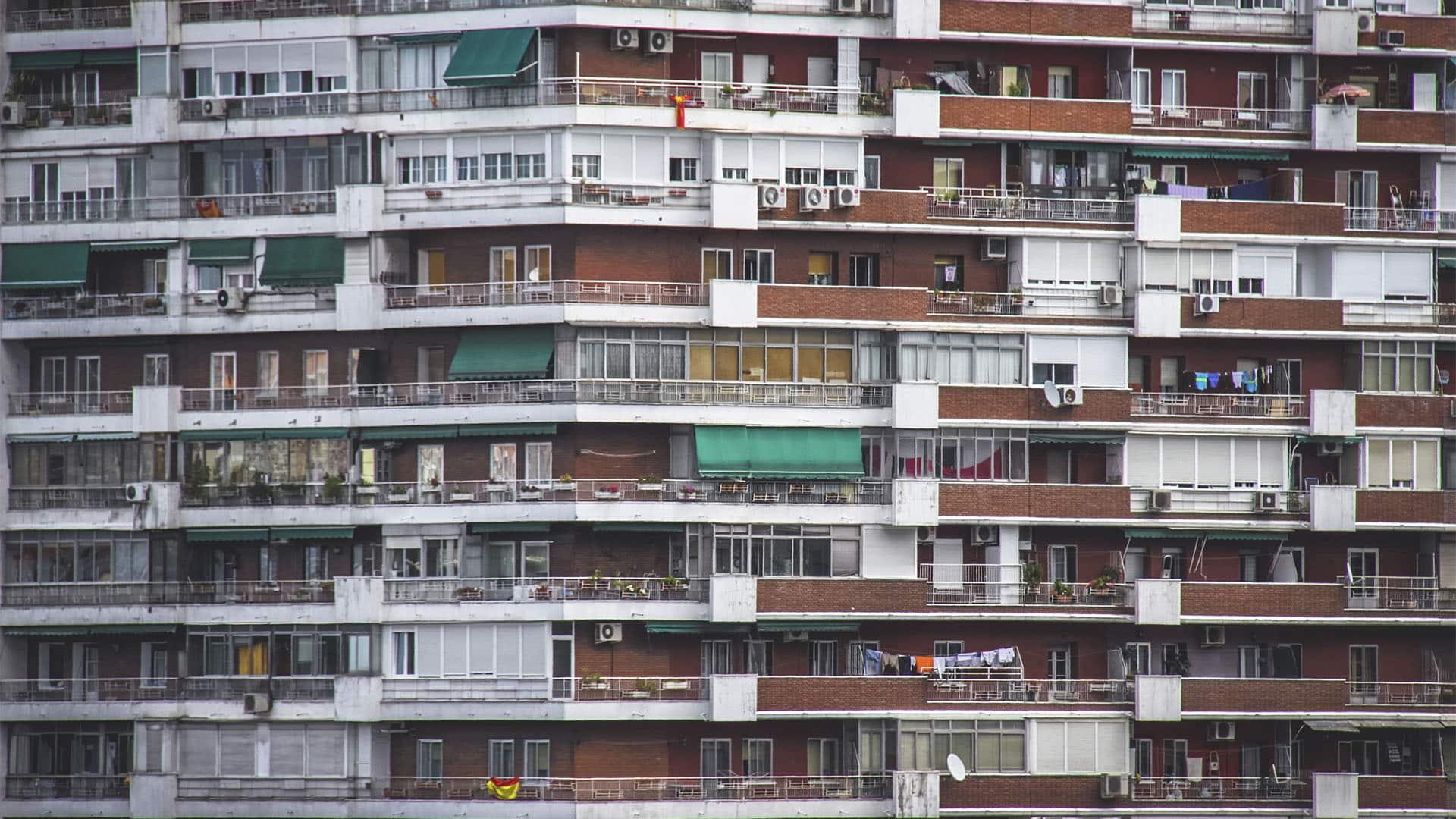
Spain’s long-running housing crisis erupted in September with the eviction of an 87-year-old woman from her previously rent-controlled flat in Madrid in which she had lived for 70 years, because she could not afford the 230% rent hike. Such was the public indignation, which sparked the setting up of a protest camp in the Puerta del Sol, right opposite the seat of the Madrid regional government, run by the conservative Popular Party (PP), and nationwide protests that the investment fund which had bought the property allowed Maricarmen Abascal back into the flat. By then she had died in hospital.
The government responded by presenting a range of emergency legislation to parliament –from a ban on evictions until 2030 to the regulation of temporary lettings and lettings by rooms– which were voted down by the PP, the hard-right VOX and the Catalan pro-independence Junts (an ally of the government when it suits its interests). Prime Minister Pedro Sánchez reacted by calling an election (not due until the summer of 2027).
Ostensibly the election was called on the housing issue. While more homes were completed between 2019 and 2025 (Sánchez took office in June 2018) than between 2012 and 2018 when the PP was in power (634,537 against 456,552), around 30,000 more social homes (casas protegidas) were built by the PP. Spain’s stock of social rental housing (less than 2% of the total stock) is the lowest in the EU.
The 2012-18 period was shaped by the aftermath of the 2008 global financial crisis and the bursting of Spain’s property bubble (a whopping 1.6 million homes were built between 2007 and 2009), while, despite COVID, 2019-25 saw a gradual recovery.
Spain has built fewer homes per capita than almost any other high-income country over the past 10 years; during that time the population rose from 46.4 million in 2015 to 49.6 million in 2025 and the number of new properties completed (privately and publicly built) totalled only 424,951.Coupled with the seemingly unstoppable boom in international tourists (from 68 million to 97 million), this has exerted enormous pressure on a housing market, which every year lags more and more behind the housing needs. With heavy demand pursuing little supply, house prices rose 81% between 2015 and 2025, far outstripping the rise in salaries (see Figure 4). As a result of this and other factors, the average age at which children leave the parental home is more than 30 (see Figure 5).
Figure 4. Growth in house prices, 2015-25 (2015 = 100)
| France | 127 |
| Germany | 154 |
| Italy | 118 |
| Spain | 181 |
Figure 5. Average estimated age at which children leave the parental home, 2025
| Years | |
|---|---|
| France | 23.8 |
| Germany | 24.1 |
| Italy | 30.2 |
| Spain | 30.2 |
| EU | 26.2 |
A massive programme to build publicly-owned homes would undoubtedly encourage more couples to start a family. The central government sets overarching housing laws and frameworks like the state housing plan, while regional governments manage how state funds are managed. This tends to work more smoothly when the central government is the same political colour as that of most of the regional governments. That was not the case during the outgoing government (11 of the 17 regional governments are controlled by the PP, several of them with the hard-right VOX). We will have to await the outcome of the election to see whether this changes.
Did you find this publication helpful?
Autores