

China’s technological rise has made it central to Europe’s debates on de-risking, strategic dependencies and industrial policy. Spain approaches this challenge pragmatically: it still sees Chinese investment and technological cooperation as tools for industrial upgrading and the green transition, even as concerns about resilience, security and asymmetry grow. Spain is moving towards selective engagement rather than either unrestricted openness or outright restriction: limiting risk in sensitive areas such as 5G core networks, relying heavily on Chinese capabilities in photovoltaics and storage, and trying to embed Chinese investment in EVs and batteries within broader industrial goals. This could give Spain a distinctive role in shaping an EU China policy that combines openness, risk management and industrial conditionality.
Recent trends: Institutionalising technology relations amid growing strategic awareness
China’s emergence as a technological power is reshaping European debates on de-risking, technological sovereignty and strategic dependencies. For Spain, the issue is not only how to reduce vulnerabilities, but also how to use engagement with China to support industrial modernisation and the green transition. This paper reviews bilateral science and technology ties and analyses three sectors – 5G, photovoltaic energy and storage, and electric vehicles and batteries – to assess Spain’s evolving position and its potential influence on EU policy towards China. Spain–China scientific cooperation has become more structured and politically anchored over the past decade, reflecting China’s growing technological weight.[1] Bilateral collaboration rests on intergovernmental agreements and political dialogue, reaffirmed through Joint Commissions on Scientific and Technological Cooperation, most recently in 2024.[2] These frameworks have been reinforced by new memoranda of understanding, including between Spain’s State Research Agency (AEI) and China’s National Natural Science Foundation (NSFC), and by sector-specific agreements on green growth, health technologies and digital trade.[3] The Spain–China Action Plan 2025–2028 identifies innovation, advanced technologies and researcher mobility as key pillars.[4]
Cooperation operates through several modalities. Bilateral R&D funding programmes— most notably CHINEKA, managed by Spain’s CDTI and China’s Ministry of Science and Technology—support applied, market-oriented projects involving firms, research centres and universities. The 7th CHINEKA Joint Call (2025–2026) targets areas such as sustainable cities, clean technologies, advanced materials and biomedicine, with generous funding on both sides.[5]
Academic collaboration continues through joint projects, co-publications and mobility schemes involving institutions such as the CSIC and the Chinese Academy of Sciences. Company-level cooperation and investment have also expanded, particularly in sectors where Chinese firms hold global competitive advantages. Thematic cooperation aligns with shared priorities: renewable energy, green technologies, advanced materials, health and biotechnology, agri-tech and selected digital applications. These areas reflect complementarities as well as China’s leadership, especially in energy-related technologies.[6]
Spain’s framing of China has gradually evolved. While China remains viewed as a valuable innovation partner, awareness is growing of risks related to dependence, security and asymmetric competition, echoing EU debates. Spain’s pragmatic posture reflects its structural position: historically more dependent on technology diffusion, Spain sees China’s rise less as direct technological displacement than as a mix of opportunity and vulnerability.
Public perceptions reinforce this dynamic. Chinese technology products are highly popular in Spain: Xiaomi holds over 30% of the smartphone market, while Chinese car sales exceeded 100,000 units in 2025, with particularly rapid growth in electric vehicles.[7] Chinese manufacturers already account for over 20% of Spain’s EV sales, led by BYD.[8]
Key case studies: 5G, photovoltaics, EVs and batteries
These three sectors – 5G, photovoltaic energy, and electric vehicles and batteries – best capture how Spain manages the opportunities and risks created by China’s technological rise.
5G networks: Risk management rather than formal exclusion
Spain’s approach to Chinese involvement in 5G reflects incremental risk management rather than formal exclusion. Chinese suppliers Huawei and ZTE have operated alongside European vendors through market-based procurement decisions.
By early 2026, Spain’s main telecom operators had effectively excluded Huawei from 5G core networks, reflecting the higher security sensitivity of core functions, while continuing to deploy Huawei equipment in radio access networks (RAN).[9]This differentiated approach prioritises core security while preserving cost efficiency in less sensitive segments. However, it raises longer-term issues related to vendor lock-in, upgrade paths and strategic autonomy.
Spain applies the EU’s 5G Security Toolbox through a risk-based approach that considers not only technical factors but also governance structures and exposure to third-country influence—criteria that in practice point to Chinese suppliers as high-risk.[10]Yet Spain has avoided legally binding bans, relying instead on guidance, assessments and operator-led adjustments.
Pressure increased in late 2025 as the European Commission moved toward mandatory EU-wide derisking of high-risk suppliers. Spain has shown reluctance to support explicit bans, citing proportionality, costs and deployment timelines, while also seeking to avoid political escalation that could affect cooperation in other strategic sectors.[11]
Photovoltaic power and grid-scale storage: Driven by deployment needs and cost efficiency
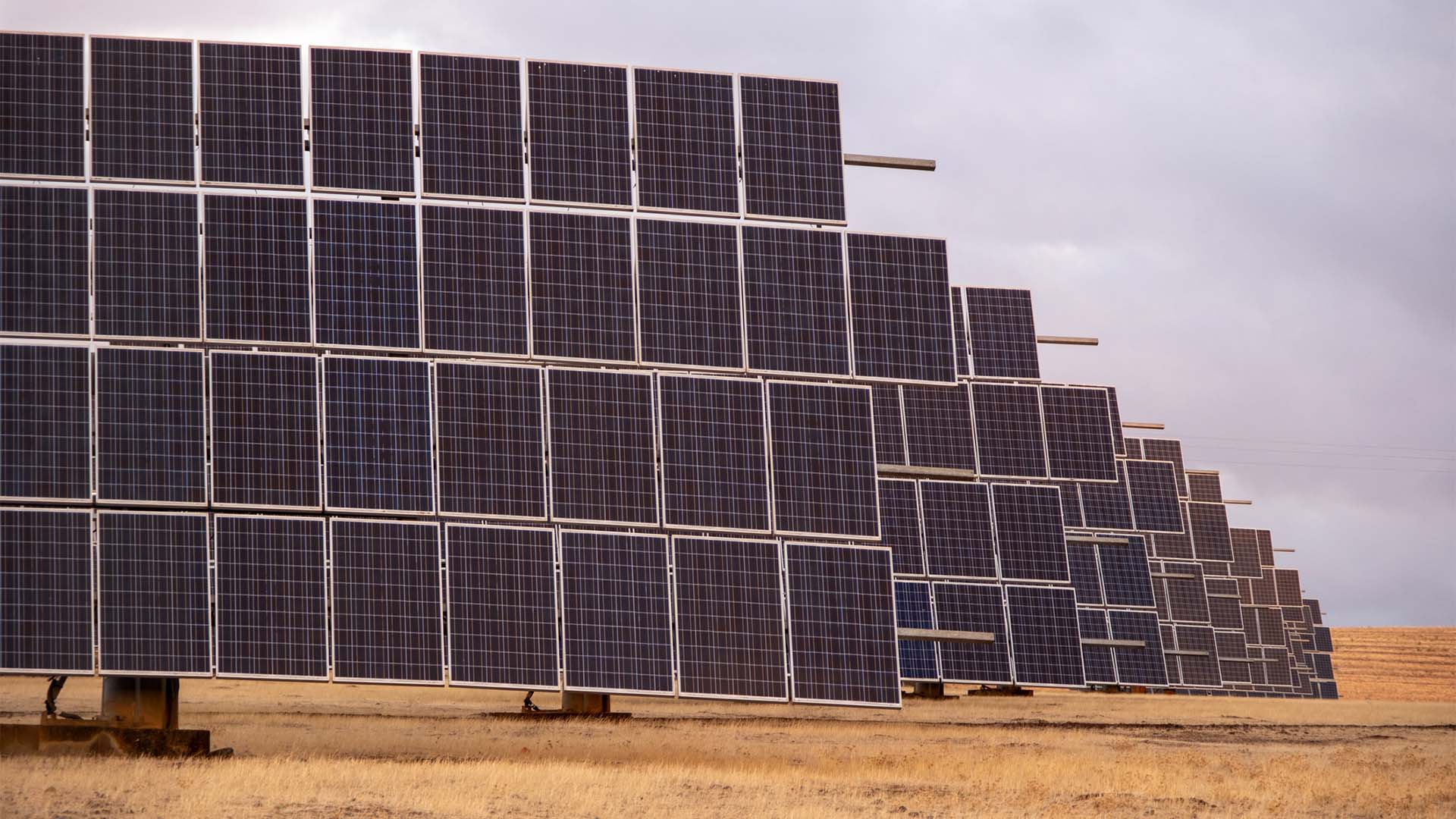
In contrast to 5G, Spain’s interaction with China in utility-scale photovoltaic is driven primarily by deployment needs and cost efficiency rather than explicit security governance. Chinese firms dominate key equipment segments, especially inverters and energy management systems. Huawei and Sungrow together accounted for over half of global solar inverter shipments in 2023, a dominance reflected in Spain’s large PV installations and hybrid PV-plus-storage projects.[12]
Concern about dependence exists but remains uneven. At EU level, the Commission has begun exploring cybersecurity risks linked to concentrated reliance on a few inverter suppliers.[13] In Spain, public discourse focuses more on rapid deployment, system flexibility and industrial competitiveness than on supply-chain security. Business debates tend to emphasise Europe’s difficulty in sustaining domestic clean-tech manufacturing[14], but some elaborate on explicit security risks.[15]
This configuration creates potential critical dependencies in inverters, software updates and long-term maintenance of energy infrastructure. Spain’s discourse in this area remains less securitised than the Commission’s emerging economic-security framing.
Electric vehicles and batteries: Both industrial priority and vulnerability for Spain
The automotive transition is the most visible expression of China’s technological rise in Spain. Electric mobility is both an industrial priority and a vulnerability for Spain, which seeks to preserve its role as a major European vehicle producer amid China’s dominance of EV supply chains.
China’s advantage combines scale leadership in battery technology and production, upstream control of raw materials and competitive EV models. This has translated into rapid market expansion in Spain, especially in the BEV segment, where Chinese brands now exceed one-fifth of sales.
More strategically significant is investment. Spain has positioned itself as a destination for battery and EV manufacturing, leveraging its automotive ecosystem, EU recovery funds and the PERTE programme. CATL’s gigafactory in Zaragoza, with Stellantis, would strengthen Spain’s battery role while also deepening reliance on Chinese technology and inputs.[16]
The Chery–Ebro joint venture in Barcelona, linked to the former Nissan plant, is particularly illustrative.[17] Spain aims to use Chinese investment to achieve localisation, supplier integration, employment creation, certain technology transfer and governance of data flows in connected vehicles, although this area is less developed. Lacking a strong legal basis to impose conditions, the government relies on negotiated understandings and informal commitments, and this is one of the reasons why it supports the “Reverse Deng” conditionality proposed in the Commission´s Industrial Accelerator Act (IAA).
Spain’s strategy foreshadows a broader European approach: neither excluding Chinese investment nor accepting it on purely market terms, but embedding it within industrial and governance frameworks.
Policy adjustment: Spain takes a pragmatic stance vis-à-vis China
Spain’s approach remains rooted in economic pragmatism, but with growing attention to risk. Unlike more security-focused member states, Spain still views Chinese technology and investment as important for industrial modernisation and the green transition. Its strategy is best described as managing duality rather than reversing engagement.
Spain lacks a national China strategy. Instead, policy is evolving through incremental shifts in discourse and sectoral governance shaped largely by EU de-risking debates, while official language still emphasises partnership and opportunity.
At the same time, concepts such as resilience, critical dependencies and technological sovereignty are increasingly present, signalling implicit recognition that some cooperation requires differentiated governance. Spain broadly aligns with the EU’s de-risking—not decoupling—framework.
The most concrete policy evolution concerns investment screening. Since 2020, Spain has expanded its ability to review foreign investments in strategic sectors through mechanisms introduced under Royal Decree-law 8/2020 and later consolidated.[18] While country-neutral, these tools are increasingly relevant for Chinese investment in green and digital sectors.
Spain applies screening selectively and pragmatically, treating it as a risk-management tool rather than as a presumption against Chinese capital. This is especially visible in batteries, EVs and renewables, where Chinese firms are often the most competitive actors.
On export controls, Spain has adopted national measures covering certain dual-use technologies that go beyond the EU common control list.[19] Pursuant to Article 9 of Regulation (EU) 2021/821, Spain introduced an autonomous national control list through Order ICT/534/2023, amending Royal Decree 679/2014, thereby subjecting to licensing requirements specific technologies that are not included in Annex I of the EU Dual-Use Regulation.[20]
Research cooperation remains one of the most open areas of Spain–China relations. While awareness of dual-use risks and technology transfer vulnerabilities is growing, Spain lacks a consolidated research security framework. Guidance remains fragmented, leaving institutions to manage risks individually.
Alongside defensive tools, Spain actively pursues selective investment attraction. The Chery–Ebro project illustrates an effort to tie Chinese investment to localisation, employment and corporate governance goals through informal mechanisms. If effective, this model could help reconcile green-transition needs with dependency risks.
Outlook: Seeking to shape an EU-China policy that leaves room for cooperation while supporting resilience in critical areas
Spain’s engagement with China encapsulates a broader European dilemma: how to harness cooperation and investment without entrenching dependency. Projects such as the CATL gigafactory and the Chery–Ebro joint venture show Spain’s preference for managing Chinese industrial presence rather than excluding it.
EU-level debates are intensifying on high-risk suppliers and clean-tech dependencies. Spain’s current path aligns with EU de-risking rhetoric, but a harder EU stance could force difficult trade-offs with its investment-attraction strategy.
Given the stakes for Spain’s industrial base, especially in the automotive transition, Madrid is unlikely to remain passive. Spain may instead seek to shape an EU-China policy that preserves room for investment and cooperation while supporting resilience in critical technologies.
This article was originally published as a chapter in the report Fragmented Europe: Dealing with China as a Technology and Innovation Power, by the European Think-tank Network on China (ETNC), published in June 2026 by Ifri, the Elcano Royal Institute and MERICS.
[1] A. Ortega. Cooperación tecnológica entre España y China. Real Instituto Elcano. 3 September 2018.
[2] J. C. Cigudosa. La colaboración científico-tecnológica entre España y China mejora nuestras capacidades para hacer frente a los retos del futuro. Ministerio de Ciencia, Innovación y Universidades. 4 November 2024.
[3] Agencia Estatal de Investigación. España y China firman un acuerdo para impulsar la cooperación científica. Agencia Estatal de Investigación. 10 September 2024.
[4] Spain and China. Proyecto de Plan de Acción (2025–2028) para fortalecer la Asociación Estratégica Integral entre la República Popular China y el Reino de España. Gobierno de España. 11 April 2025.
[5] Ministerio de Ciencia, Innovación y Universidades and Ministry of Science and Technology of the People’s Republic of China. 7th Chinese-Spanish Joint Call for R&D&I Projects 2025–2026. 2025.
[6] V. Larraga Rodríguez de Vera. 2.º Informe sobre la ciencia y la tecnología en España 2019. Fundación Alternativas. 2019.
[7] Forbes. Xiaomi celebra 8 años en España con «un liderazgo sostenido por encima del 30% de cuota» en smartphones. Forbes. 19 November 2025.
[8] J. Bacorelle. El coche eléctrico chino se hace con el 20% del mercado español. ABC. 13 January 2026.
[9] I. del Castillo. Telefónica España asigna a Nokia su ‘core’ 5G y elimina a la china Huawei. Expansión. 23 January 2025.
[10] Government of Spain. Real Decreto-ley 7/2022, de 29 de marzo, sobre requisitos para garantizar la seguridad de las redes y servicios de comunicaciones electrónicas de quinta generación. Boletín Oficial del Estado. 29 March 2022.
[11] M. V. Gómez. Bruselas avanza para excluir a proveedores chinos como Huawei y ZTE de las redes europeas. El País. 20 January 2026.
[12] Huawei y Sungrow mantienen el liderazgo en el mercado de inversores fotovoltaicos, que creció un 56% en 2023. Review Energy. 7 August 2024.
[13] P. Jowett and M. Willuhn. ¿Prohibirá la UE los inversores chinos? La Comisión en materia de ciberseguridad baraja crear una «lista de proveedores de alto riesgo». 21 January 2026.
[14] L. A. Peralta. Europa reduce la burocracia para las industrias verdes: ¿puede mantenerse competitiva? El País. 2 June 2025.
[15] J. Satisteban & S. Acosta. España y el dilema Huawei: ciberseguridad, tecnología y riesgo en el corazón del sistema energético. El Periódico de la Energía. 19 December 2025.
[16] Ana I. Gracia. “Stellantis y CATL construirán una gigafactoría de baterías en Zaragoza.” El País, 10 December 2024.
[17] Ministerio de Industria y Turismo. “Industria pone en valor la apuesta de Ebro por Barcelona como polo de fabricación de sus modelos para Europa”, 19 September 2025.
[18] Gobierno de España. Real Decreto-ley 8/2020, de 17 de marzo, de medidas urgentes extraordinarias para hacer frente al impacto económico y social del COVID-19 (investment screening provisions). Boletín Oficial del Estado.
[19] European Union. Regulation (EU) 2021/821 of the European Parliament and of the Council of 20 May 2021 setting up a Union regime for the control of exports, brokering, technical assistance, transit and transfer of dual-use items (Article 9). Official Journal of the European Union.
[20] Gobierno de España. Orden ICT/534/2023, de 26 de mayo, por la que se modifica el Real Decreto 679/2014, de 1 de agosto, por el que se aprueba el Reglamento de control del comercio exterior de material de defensa, de otro material y de productos y tecnologías de doble uso. Boletín Oficial del Estado.