

Executive summary
(a) The Paris Agreement has delivered significant results since its adoption, yet we are still far off track to meet the goals established in 2015[1]
Since its adoption in 2015 the Paris Agreement has played a central role in shaping global climate governance. It established long-term goals to limit global temperature increases and created a framework for countries to submit, review and periodically update national commitments. The agreement has delivered significant results since its adoption, successfully lowering expected temperature rises from 4ºC to a projected 2.3ºC-2.5ºC, provided current commitments are met. However, we are still far off track to meet the established goals. Closing the ambition-action gap will require significantly strengthening climate commitments and accelerating implementation efforts before the end of the decade. Enhanced action at scale and speed by all actors is required to align scientific recommendations to actions that help significantly bend the emissions curve rapidly.
(b) In a context of geopolitical fragmentation, COP30 can be dubbed a lifeline for (climate) multilateralism that yielded some –rather modest– results
Ten years after the agreement’s adoption, the climate summit held in Belém in 2025 took place amid rising geopolitical tensions, the announced second US withdrawal from the Paris Agreement and an isolated EU that has found it hard to achieve ambitious climate commitments. During a period of significant international fragmentation and a diminished global appetite for ambitious climate commitments, expectations for the conference were modest. COP30 nevertheless managed to reach several agreements and helped sustain the multilateral climate process at a time when the legitimacy[2] and effectiveness of international climate governance are increasingly questioned.
COP30 will be remembered for the submission of updated climate commitments, an agreement on adaptation indicators, a call to treble adaptation finance, the development of a Mechanism for Just Transition and the 2026-34 Gender Action Plan, among others. Several issues remained unresolved, notably progress on the COP28 commitment to transition away from fossil fuels and stronger action on deforestation. Acknowledging the difficulty of incorporating these topics into formal decision texts, the Brazilian presidency of COP30 announced the development of two roadmaps on transitioning away from fossil fuels (TAFF) and addressing deforestation.
Preserving the United Nations Framework Convention on Climate Change (UNFCCC) while adapting it to ensure Paris-aligned action on the ground will be essential to maintain global coordination on climate at a time when climate extremes are becoming increasingly frequent, generating growing economic, human and environmental costs.
(c) Political divisions, the EU’s limited influence and the need to reposition itself as a structural leader
The closing plenary at COP30 proved particularly contentious, as numerous countries, the EU included, criticised the COP presidency for gavelling through decisions without a full consensus, particularly regarding the adaptation indicators. The closing session also made the EU’s relative isolation increasingly visible, as it struggled to secure stronger mitigation outcomes, more robust adaptation indicators and explicit references to transitioning away from fossil fuels. Moving forward, the essentials of EU climate leadership can include: developing a long-term strategy on climate diplomacy; improving internal coordination ahead of COPs; exercising structural leadership –in addition to holding the line on directional leadership–; and rebuilding coalitions and strengthening alliances with state and non-state actors capable of advancing climate ambition, particularly when consensus proves difficult.
(d) While the UNFCCC process remains essential to develop and uphold the consensus-based global norm to address climate change, it is exhibiting diminishing marginal returns
Insufficient results after three decades of annual climate summits have once again raised the question of the usefulness of (and the need to reform) the UNFCCC process. This is so despite a widespread consensus regarding the process being considered the best tool there is to reach consensus and ensure legitimacy as we strive for a stable climate. With the Paris Agreement rulebook now largely completed, future negotiations are expected to have less negotiated outcomes, although reviews, updated commitments and mechanisms are ongoing. Academic and policy-oriented reviews of the process could consider reflecting on the universality and consensus principles that have guided negotiations over 30 years, possibly embracing a two-tier diplomacy inclusive of climate clubs within negotiated COP decisions.
[1] The authors would like to gratefully acknowledge the suggestions and comments to the policy paper by Professor Gonzalo Escribano, director of the Energy and Climate Programme at Elcano Royal Institute. The usual disclaimer applies.
[2] Legitimacy according to Dellmuth, Gustafsson & Segovia-Tzompa (2025, p. 1) is understood as the ‘belief or acceptance that authority is appropriately exercised’, which is gauged to be a prerequisite for the effectiveness of the climate regime.
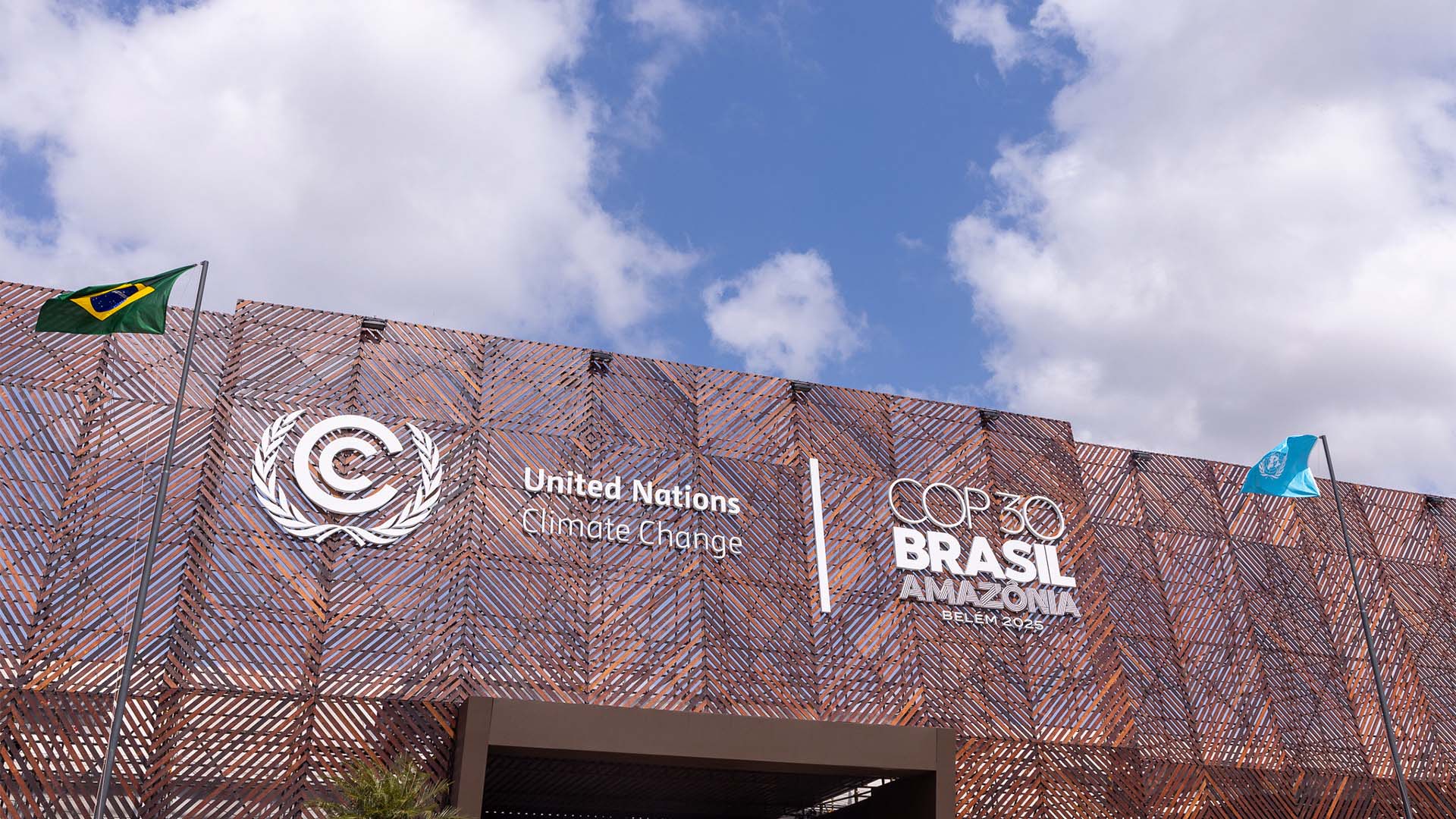
Image: Entrance to the COP30 venue in Brazil, Belem (17/11/2025). Photo: Connect4Climate (CC BY-NC-SA 4.0).