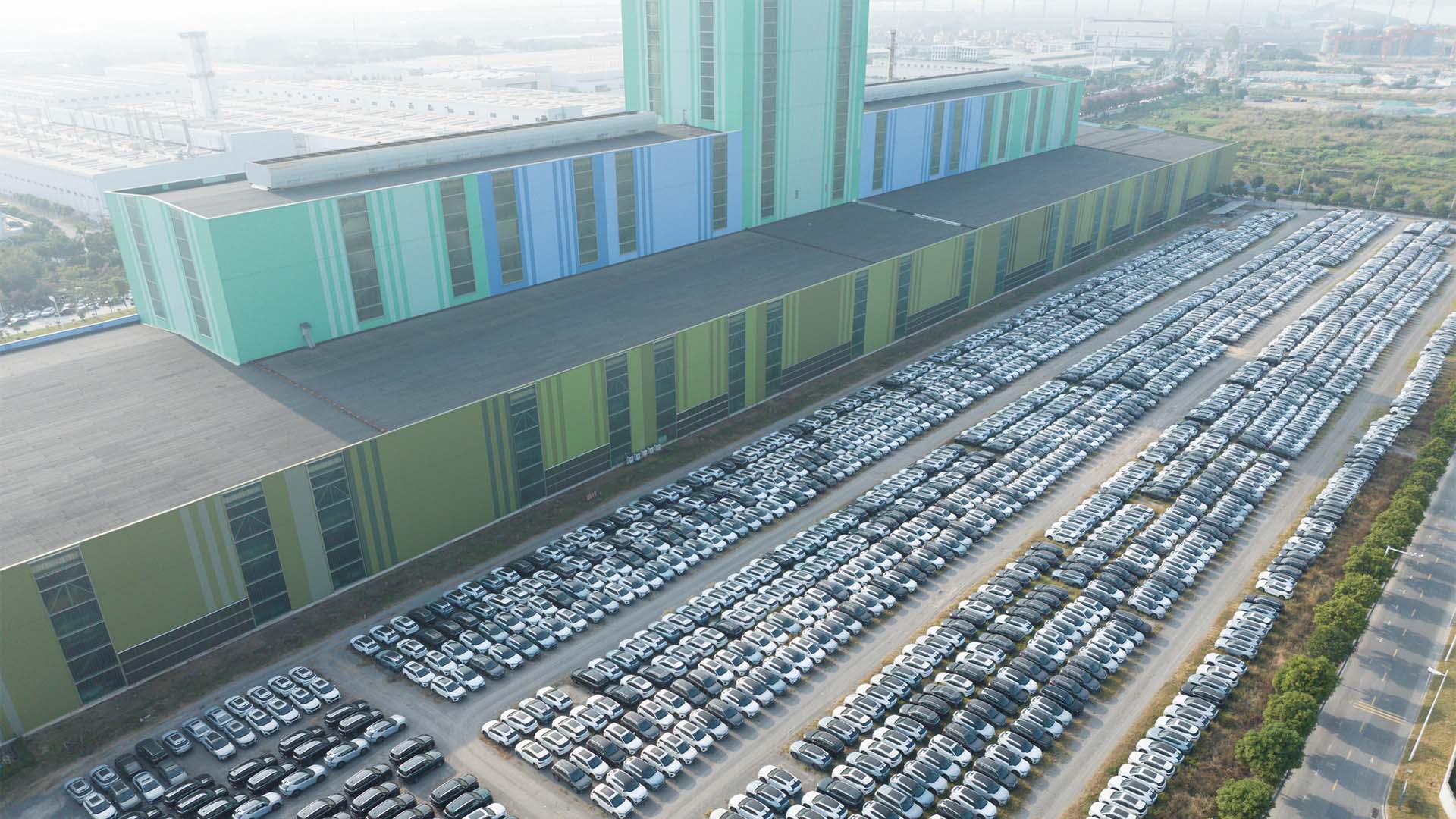


Defining the right policy vis-à-vis China is the most important external economic challenge faced by the EU. After the agreements reached at the EU-China Trade and Investment consultations covering hybrid cars, the EU needs to adopt a number of decisions of strategic significance. The fundamental basis for a strategic response is to have a proper diagnosis of three distinct but interrelated challenges (related to macroeconomics, economic security and competitiveness), which are sometimes confused under the overall simplifying political narrative of the ‘China shock 2.0’. Yet each of the three challenges has different causes and should be addressed through distinct tools.
The question is whether Europe will continue reacting to each wave separately, or finally build the capabilities, institutions and financial resources needed to face the Chinese ocean with new confidence.
The first and more structural challenge is the macroeconomic imbalances underlying the Chinese economic model and the contribution of its domestic industrial policies to those imbalances. The latter can only be remedied through structural reforms of the Chinese economy on which external actors only have a limited influence. The US, the most powerful country in the international political economy, has deployed all of its economic statecraft to change China over the past 20 years but with little success. The EU should certainly, with other partners, maintain pressure on macroeconomic adjustments through the IMF/G20 process and take the initiative in the WTO to launch plurilateral critical mass negotiations to find overarching agreements on the interface between trade and industrial policies. But it should not pretend that there is a trade policy solution to the EU’s trade deficit with China. As rightly stated by the Chair of the EU-China Chamber of Commerce, Jan Eskelund, achieving a balanced trade with China is not a meaningful aspiration: ‘We are never going to have balanced trade with China because China is just very good at producing quality products at low cost… The problem is when the deficit affects economic security’.
The second challenge is economic security. It stems from China’s dominance of critical chokepoints and the actual risk that these dependencies could be weaponised, with potentially major impacts on the European economy. A strategic response to this challenge should combine three lines of action. First, there has to be a medium-term diversification strategy based on cooperation with trusted partners to develop and support alternative value chains in the priority areas where the economic security threat is most acute. The EU thus needs to strengthen its network of free-trade agreements and avoid antagonising partners with inward-looking policies. The Commission will be presenting in December a Diversification Instrument that it is hoped would give priority to this ‘trusted partner’ dimension of the diversification agenda. Secondly, the EU should develop a mutual assurance/early warning mechanism with China to reduce the risk of escalation linked to export controls or other economic security instruments. The recent agreements reached in the Trade and Investment Consultations are a first step in this direction. Finally, the EU needs to have the capacity to react rapidly and with proportionate but substantial measures to coercive threats. As proposed by France and Germany in their recent non-paper, the Commission should have the authority to adopt these measures unless there is a qualified majority against. The best way to achieve this objective would be through a reform of the decision-making procedure under the Anti-Coercion Instrument following this same logic.
The third challenge is the intensification of competition with China in some key segments of European manufacturing with potential major economic and social implications. Regardless of the potential role of subsidies or the undervaluation of the renminbi, the reality is that Chinese producers have developed international competitiveness. Thus, any strategic response needs to start with a recognition of the need for EU industry to adjust to a new competitive reality. The best trade policy instruments to facilitate the process of adjustment are temporary safeguard measures linked to a commitment by industry to undertake the necessary investments and corporate restructuring to become internationally competitive. The agreement reached with China on hybrid cars points in this direction. A similar approach could be followed in other sectors, although the EU should be careful not to relax excessively the standards for safeguards under the rules of the WTO. The more critical issue is, however, that the three to four years of temporary protection need to go together with adjustment plans aimed at regaining international competitiveness.
Yet there is a more fundamental issue with the way Europe frames its response. It should stop talking about ‘China shocks’. The metaphor suggests a succession of temporary disruptions, each followed by a return to a more stable equilibrium. This is not what Europe is facing. China is better understood as an ocean: a structural force in the global economy that will generate wave after wave of competitive pressure as its industrial capabilities continue to expand and upgrade. The challenge for the EU is therefore not simply to manage the current wave, but to develop a long-term strategy that prepares it for those that will follow.
This requires a much more ambitious approach to European competitiveness. Rather than reacting sector by sector to Chinese competition, which can only work in the short-term to gain time, the EU needs to develop a four-fold strategy to strengthen its industrial and technological position in the medium- to long-terms.
First, it needs to identify the sectors that will be strategic for Europe’s future economic security and prosperity, and invest in developing the capabilities required to compete in them. AI is a good example. Strategic priorities cannot be determined exclusively by existing market structures or short-term profitability. They must also reflect Europe’s technological dependencies and how to reduce them, and its future economic needs and strategic sovereignty.
Secondly, in sectors where Europe already enjoys a competitive advantage, it must continue investing to maintain and extend its lead. Existing industrial strengths should not be taken for granted. China’s experience demonstrates how quickly technological capabilities can evolve when investment, industrial policy and market development reinforce one another. European leadership in sectors such as advanced manufacturing, aerospace, pharmaceuticals, biotech or clean technologies will require continuous investment in innovation, skills and production capabilities.
Third, where Europe is falling behind, it needs to adopt what has been described as a reverse-Deng approach. Just as China used openness and market access to attract investment, build industrial capabilities and progressively move up the technological ladder, Europe needs to deploy its own market power more strategically to rebuild capabilities in critical sectors. This does not mean abandoning openness, but recognising that openness alone is insufficient when industrial capabilities are being built elsewhere at a scale that European firms struggle to match. A well-designed Industry Accelerator Act could contribute towards this objective if based on a ‘Made with the EU’ approach which reinforces relations with trusted partners and brings a positive impact to local industries.
Fourth, Europe should continue to demand and negotiate greater access to the Chinese market. This is particularly important in services, where European companies retain significant competitive advantages. While much of the debate on China focuses on manufacturing and industrial goods, the EU’s economic relationship with China is also shaped by the opportunities available to European service providers. Greater reciprocity in market access would help rebalance the relationship and create new opportunities for European firms. The EU should therefore reflect on a new type of investment and services agreement with China that incorporates discipline on a level playing field and assurances against disruption of supply chains.
All of this, however, requires money. And here lies one of Europe’s most fundamental strategic contradictions. The EU invests 2.2% in public and private research and development, which is considerably less than either the US or China (respectively 3.6% and 2.6%). Still, EU political leaders are debating how to further trim the Multiannual Financial Framework proposed by the Commission, with the Irish presidency proposing substantial cuts in the ‘competitiveness’ budget. Europe cannot simultaneously aspire to technological sovereignty, industrial renewal and greater geopolitical influence while systematically underfunding the capabilities required to achieve these objectives.
The response to ‘China shock 2.0’ should therefore be about much more than trade defence or the management of economic dependencies. It should become the catalyst for a long-term European strategy that combines economic security, industrial competitiveness and technological investment. The waves coming from China will not stop. The question is whether Europe will continue reacting to each one separately, or finally build the capabilities, institutions and financial resources needed to face the ocean with new confidence.
Did you find this publication helpful?
Autores