Madrid, 17 June 2026.
Despite growing uncertainty and increased geopolitical fragmentation, globalisation is not in retreat: it is, however, changing. The historical cycle that began in the 1990s seems to have run its course, with the globalisation paradigm, which these days rests as much on its economic as on its soft power dimension –migration, sport, culture and science, among other variables– and on an increase in the military dimension, irreversibly transformed.
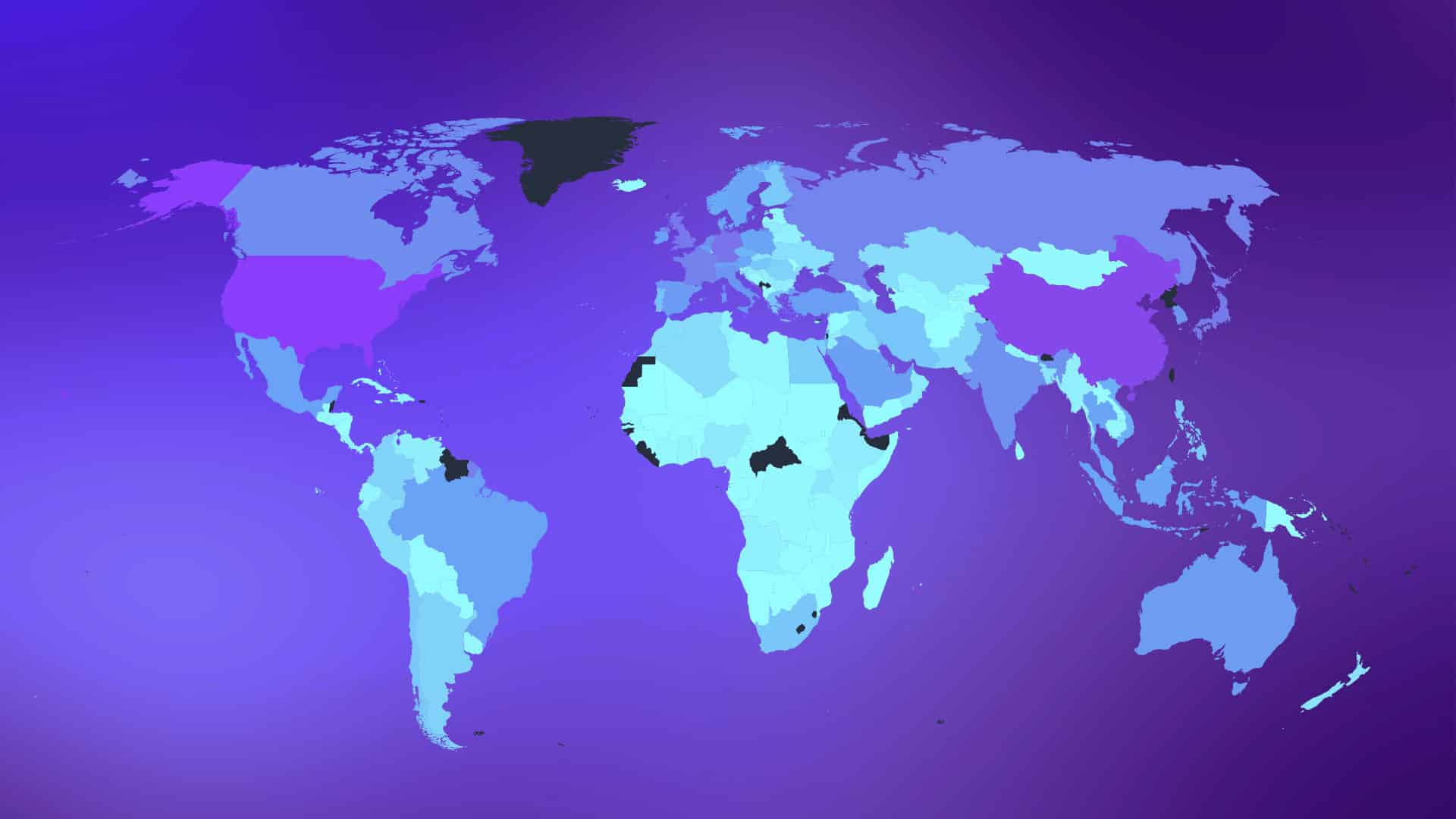
In 2025 the US continues to head the Elcano Global Presence Index, still followed at some considerable distance by China. Beijing, Washington and Moscow account for the greatest absolute increases in presence, while Spain retains its ranking in 13th place and is one of the few European countries not to lose global presence. Among the main European economies, the Netherlands and Germany have seen the steepest falls, whereas France and Italy have incurred more modest setbacks. Other advanced economies such as Japan and Australia have also lost presence.
These are some of the main conclusions of the 2026 Elcano Global Presence Index, compiled by the Elcano Royal Institute to measure and compare countries’ foreign influence since 1990 based on their economic, military and soft power dimensions, with results for 150 countries. A new feature for this edition, on the occasion of the Institute’s 25th anniversary, is the inclusion of an assessment of the historical process of globalisation from 1990 to 2025, putting some of the most widespread ideas regarding the evolution of the international order to the test.
In regional terms, globalisation continues to concentrate in Europe, North America and Asia. The main change in recent decades lies in the emergence of Asia, whose share of global presence has almost doubled since 1990, driven to a large extent by the growth of China. This trend, which has accelerated since 2010, has enabled the region to overtake North America, consolidating itself as the second-largest focus of global presence after Europe. The Middle East has risen slightly, owing mainly to its importance in energy, whereas Latin America and Africa have reduced their relative share.
The Index reveals two major phases in the process of globalisation. The first, running from 1990 to 2010, was characterised by the European boom and the important role played by the economic dimension. The second, over the course of last 15 years, was driven by Asian countries and the growing importance of the soft power dimension as an engine of global presence; a trend that was abruptly halted by the pandemic.
As far as the powers that lead the Index are concerned, China and the US continue gaining global clout, driven above all by their greater economic presence. However, there has been a notable divergence in the evolution of their soft power presence: whereas China continues to broaden its international projection in this area, the US is reducing it. Russia, meanwhile, is concentrating its advance almost exclusively in the military domain.
Manuel Gracia, lead researcher and coordinator for the Elcano Royal Institute’s Elcano Global Presence Index, says that ‘these results suggest a certain inconsistency in Trump’s MAGA rhetoric, given that rather than a loss of US importance, we’ve witnessed the elevation of China, a country of 1.5 billion inhabitants –more than 17% of the world’s population– that has undergone the greatest development since 1990’.
The EU has seen its relative share fall in recent years. Having maintained a greater global presence than the US since 2005, the EU has undergone a significant fall from 2020, marked by the impact of Brexit, the pandemic and mainly as a consequence of the reduced contribution of its two main economies, those of Germany and France. As a result, in 2025 the US overtook the EU’s global presence level for the first time.
‘In light of the figures, we have passed from the bipolarity of the Cold War (US-USSR) to an apparently multipolar world, now replaced by a relatively new bipolarity (US-China), broken only by the European surge up until 2010 and by the Asian countries since then’, explains Blanca González, research assistant at the Elcano Royal Institute and co-author of the Index.
‘Nobody knows for certain whether we’ve already entered into a new order or we remain in that no-mans-land where monsters are liable to emerge. What is clear, however, is that the disappearance of consensus heralds a period of uncertainty in which the rules, the protagonists and ultimately the way globalisation unfolds will be redefined’, concludes Gracia.
The Elcano Royal Institute celebrates its 25th anniversary in 2026 reaffirming its commitment to rigorous and independent analysis of the major international challenges. The Elcano Global Presence Index is now in its 15th edition, consolidating itself as one of the main tools for facilitating analysis of international relations, foreign policy and global issues on the basis of rigour, independence, plurality and diversity of perspectives.
For more information regarding the ‘2026 Elcano Global Presence Index’, read the full report and/or contact the Elcano Royal Institute’s Press Department by writing to prensa@rielcano.org.