
Last February, Spain’s National Institute of Statistics (INE) confirmed that, having almost doubled in number over the course of the previous decade, the foreign-born population resident in Spain had exceeded the threshold of 10 million people for the first time. A fundamental role in this demographic milestone was played by Latin American immigrants and particularly those from Colombia and Venezuela, who already make up the second- and third-largest foreign communities, exceeded only by their Moroccan counterparts. But whereas Colombian immigrants have tended to spread out relatively evenly across the entire country, more than half of their Venezuelan counterparts (52%) have ended up clustering in three regions that between them do not account for one quarter of Spain’s inhabitants (24.6%): the Canary Islands, Galicia and Madrid. In the case of the first two, the geographical starting point of many Spanish emigrants who headed to Venezuela in the 19th and 20th centuries has acted as the chief magnet when choosing these regions as their new place of abode; meanwhile, as far as greater Madrid is concerned, the capital and the surrounding area’s status as the great metropolis has been the cause of the migratory influx.
Figure 1. Municipalities with the largest Venezuela-born populations
In this context it should not be surprising that the city of Madrid turns out to be the main place of residence for Venezuelan immigrants coming to Spain, just as in the case of many other groups of foreigners. The presence of Venezuelans in the Spanish capital does, however, show two particular characteristics worthy of emphasis. The first and most striking is their vertiginous growth since the start of the century. Thus, whereas in 2001 it was a minor grouping comprising barely 5,000 people, comfortably outnumbered by the already well-established Colombian and Ecuadorean communities, its size grew eightfold between 2011 and 2025, making it the main foreign diaspora residing in the city.
Figure 2. Origin of the main foreign communities resident in the municipality of Madrid
The second idiosyncrasy of the Venezuelan population resident in Madrid, this time not so obvious, is a spatial distribution throughout the municipal territory that is less segregated than the other main foreign communities, with the exception the Argentine community.[1] In general, the first groups of immigrants arriving in a city originating from the same country tend to share a similar socioeconomic profile, which induces them to cluster in specific areas attracted by the support and contact networks established by the ‘pioneers’ that help them to settle. In turn, this clustering phenomenon encourages the emergence of a community latticework made up of associations and businesses with links to the diaspora that strengthens the area’s capacity to continue attracting subsequent inbound waves. Only as time elapses and they gradually integrate themselves into the host society do such diasporas sometimes start to spread to other districts in the city.
Figure 3. Segregation of residents in the Madrid municipality by their country of birth
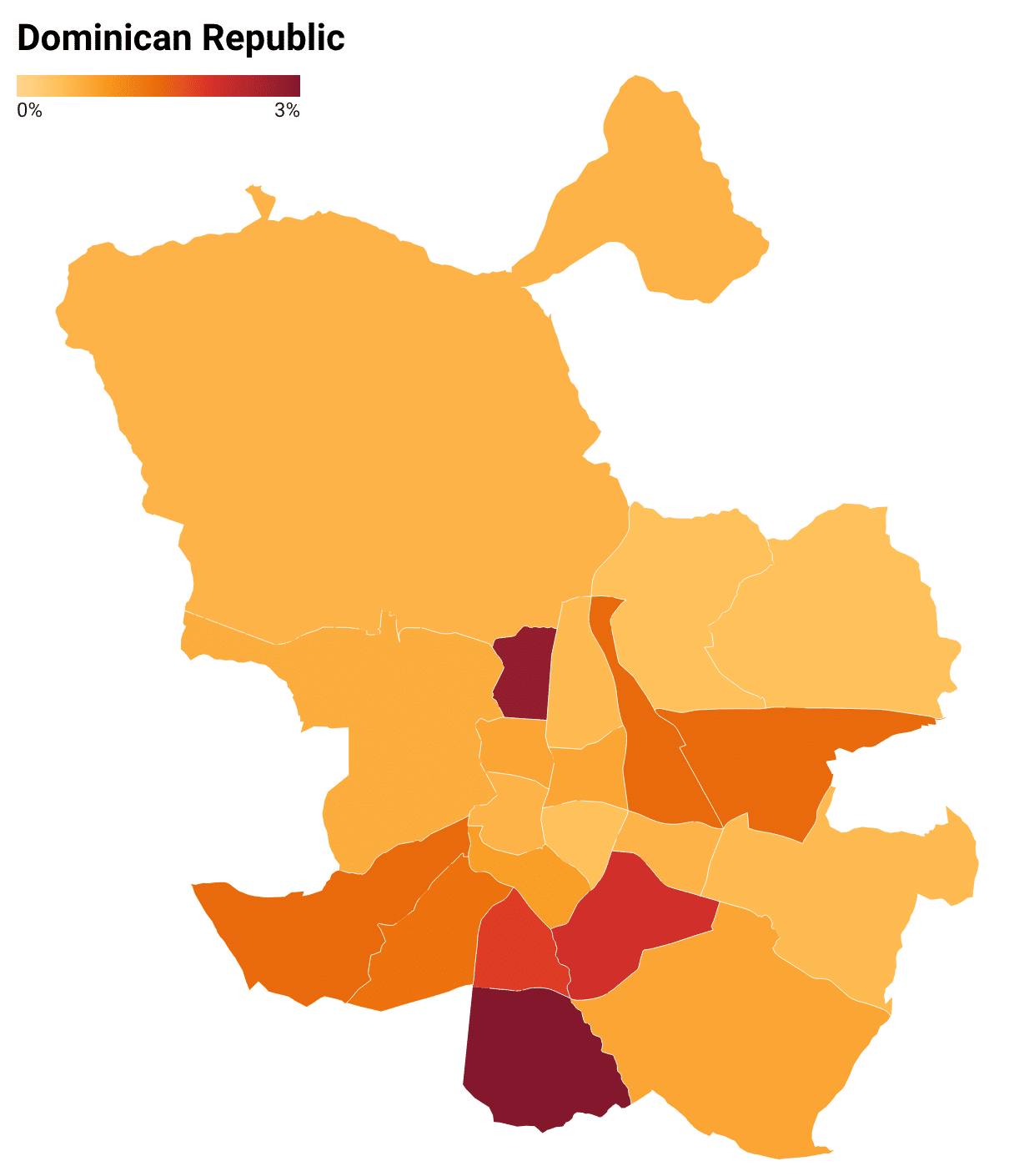
In the case of Madrid, some groups, such as the Chinese and Dominican communities, show a clear manifestation of this pattern with their respective settlements in the districts of Usera and Tetuán, and in general, all groups of immigrants hailing from countries with lower levels of development than Spain’s have tended to cluster in districts to the south and east (as well as in the aforementioned Tetuán, which is a ‘northern’ exception). But among residents born in Venezuela the phenomenon is not so clearly evident. Thus, although the district where they have the greatest presence is Villa de Vallecas (6.2%), one is just as likely to run across a Venezuelan neighbour in Villaverde as in Barrio de Salamanca, in Usera as in Fuencarral, or in Puente de Vallecas as in the Central District, with their presence not falling below 2% in any of the 21 Madrid districts.
Figure 4. Venezuelans resident in the municipality of Madrid
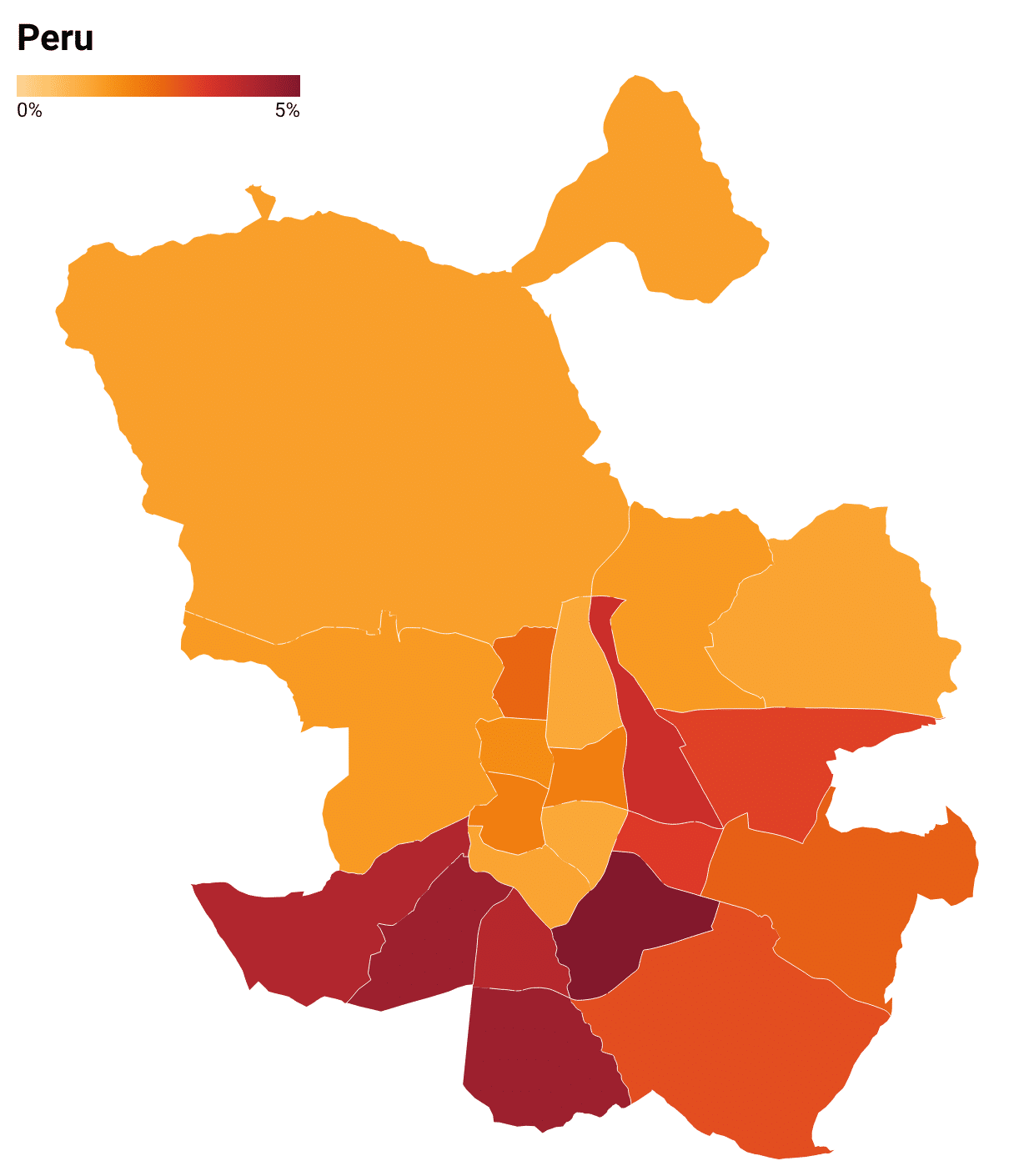
Figure 5. Territorial distribution of some of the main foreign communities residing in Madrid

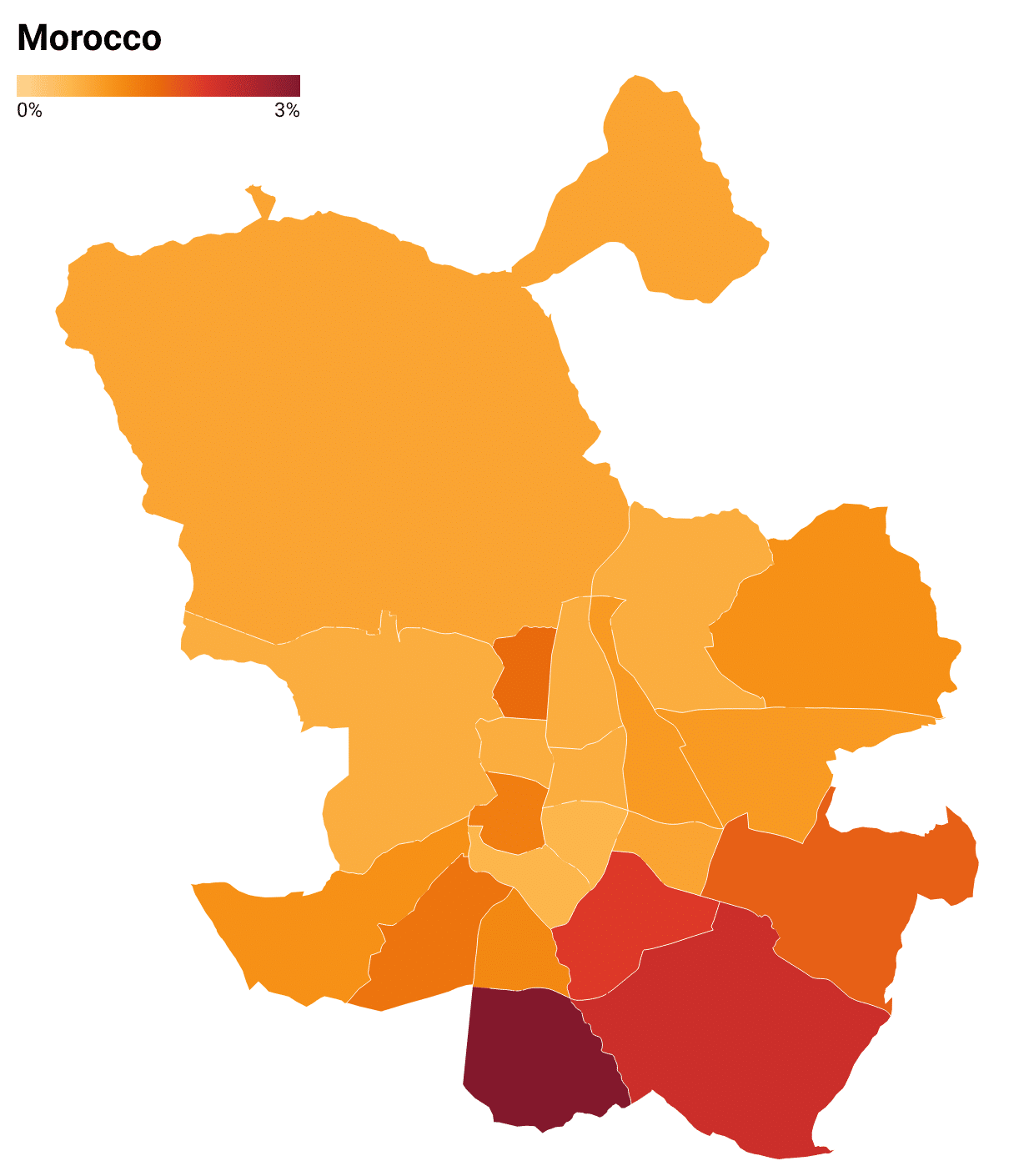
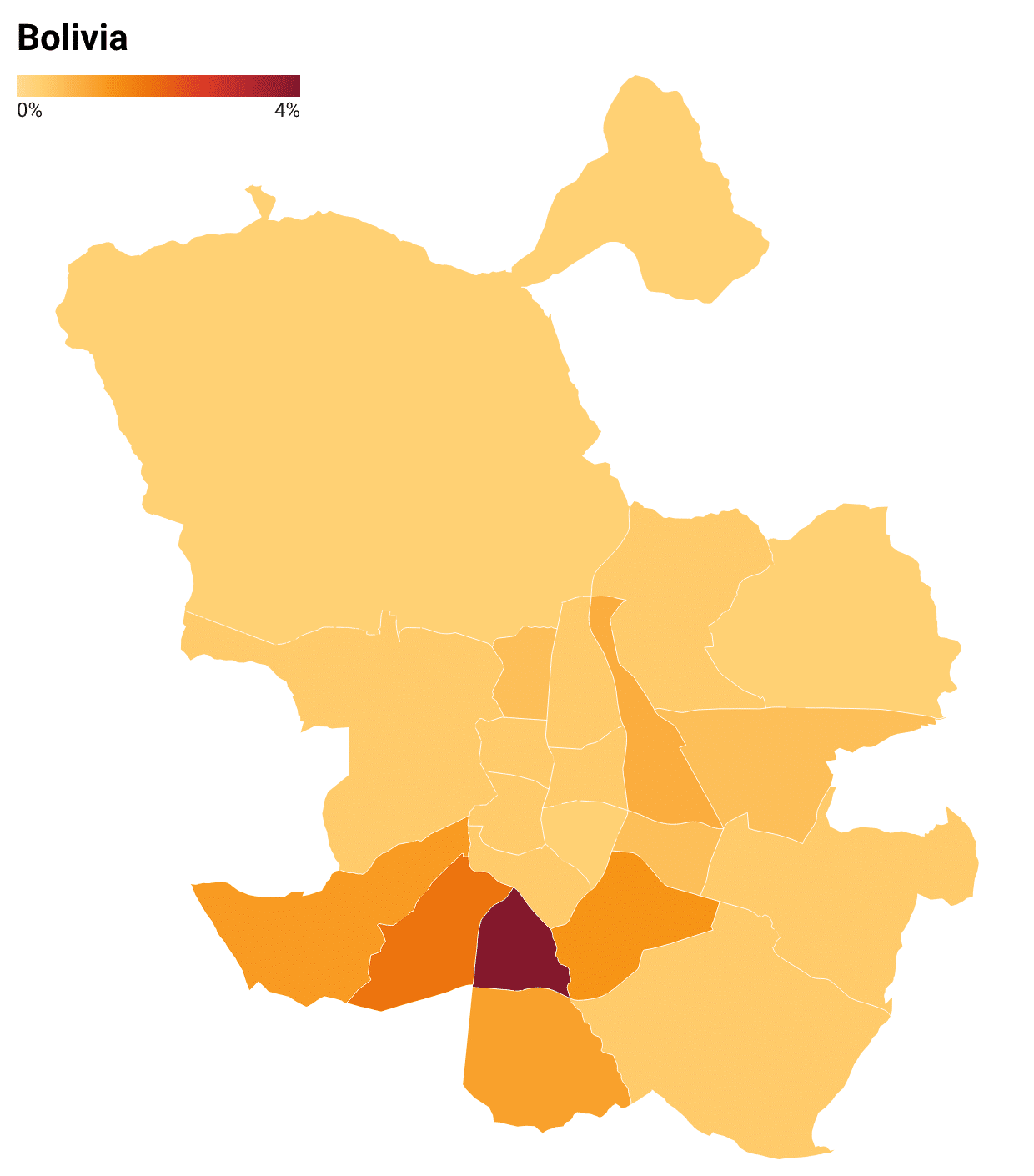
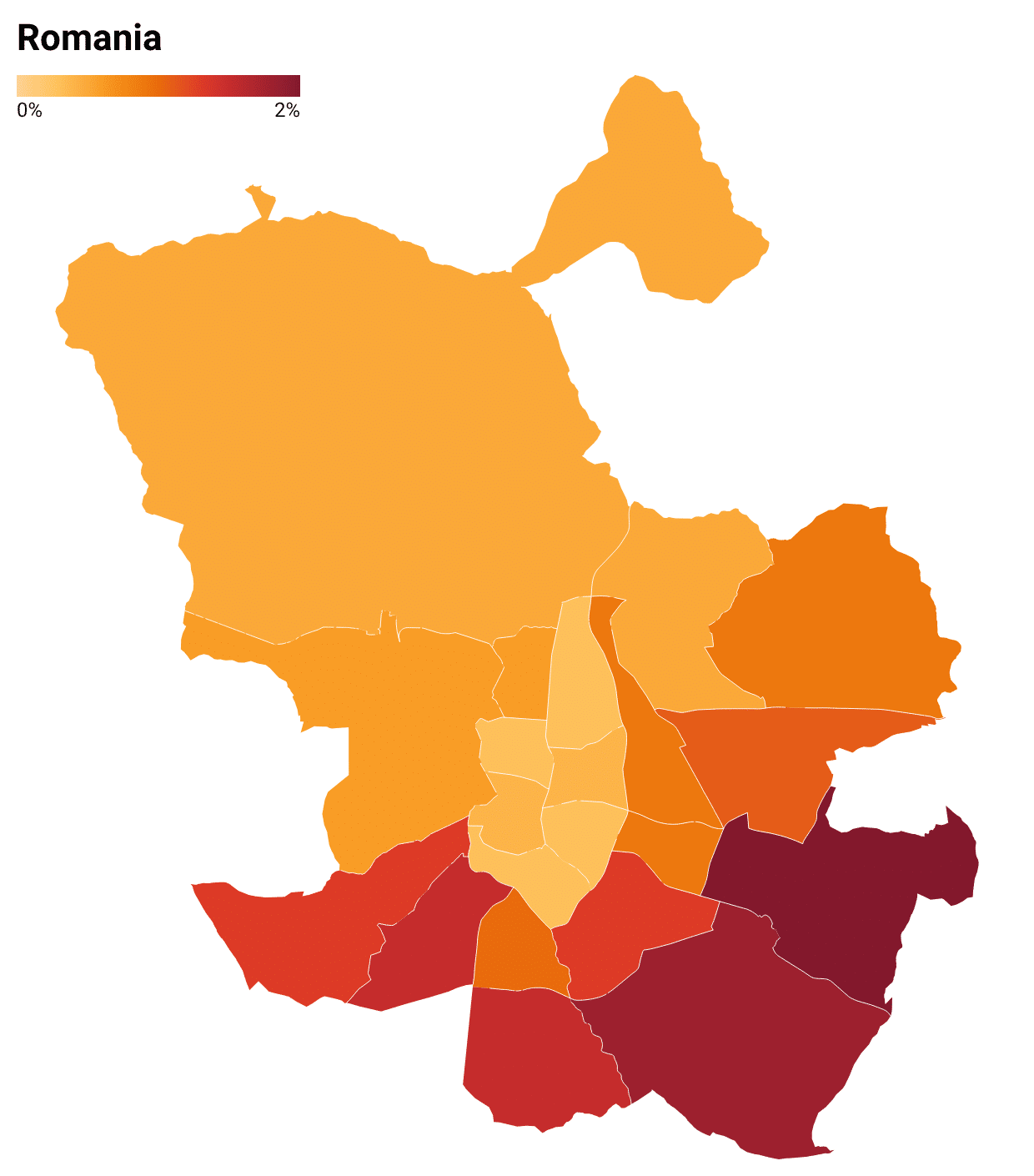
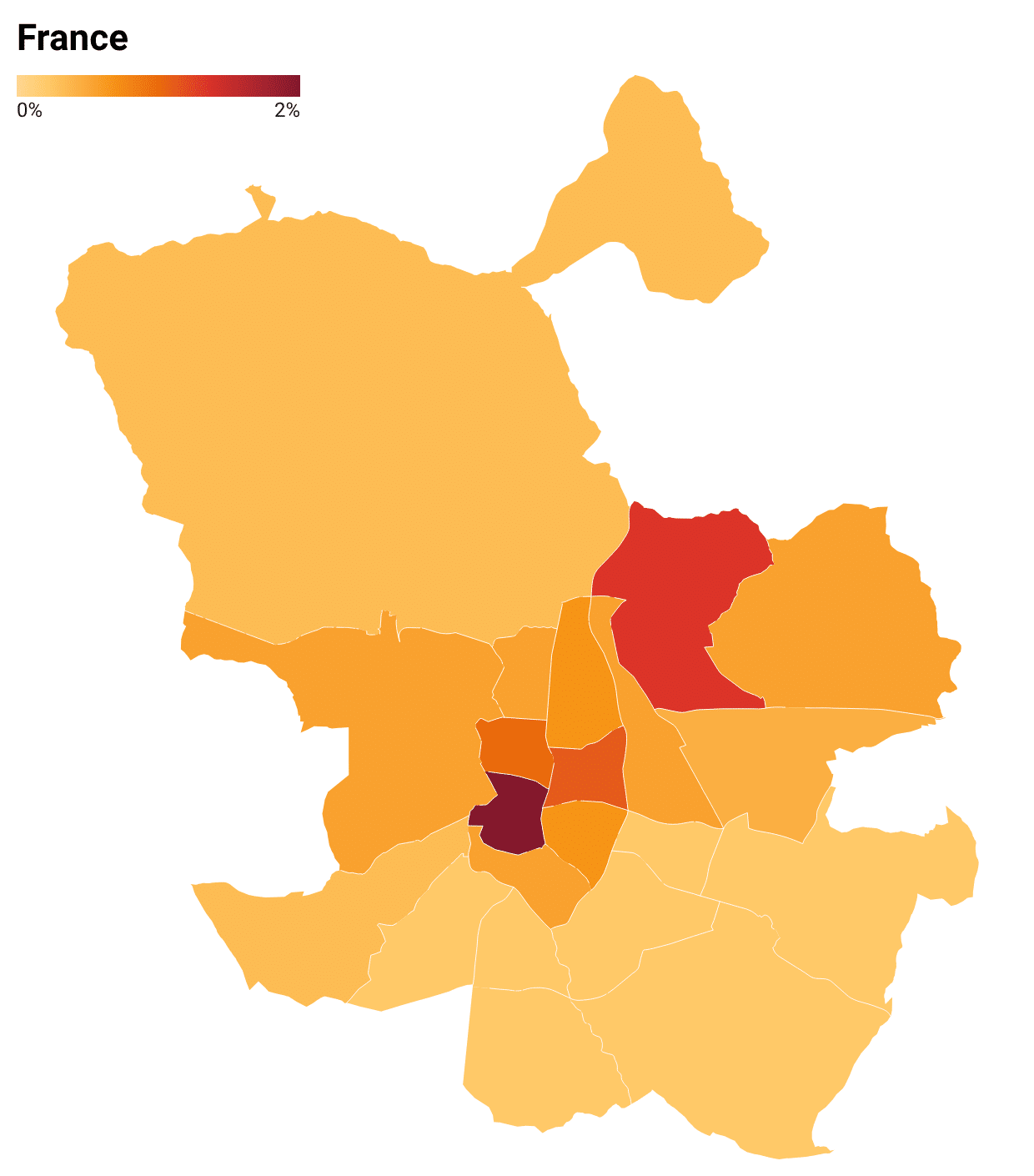
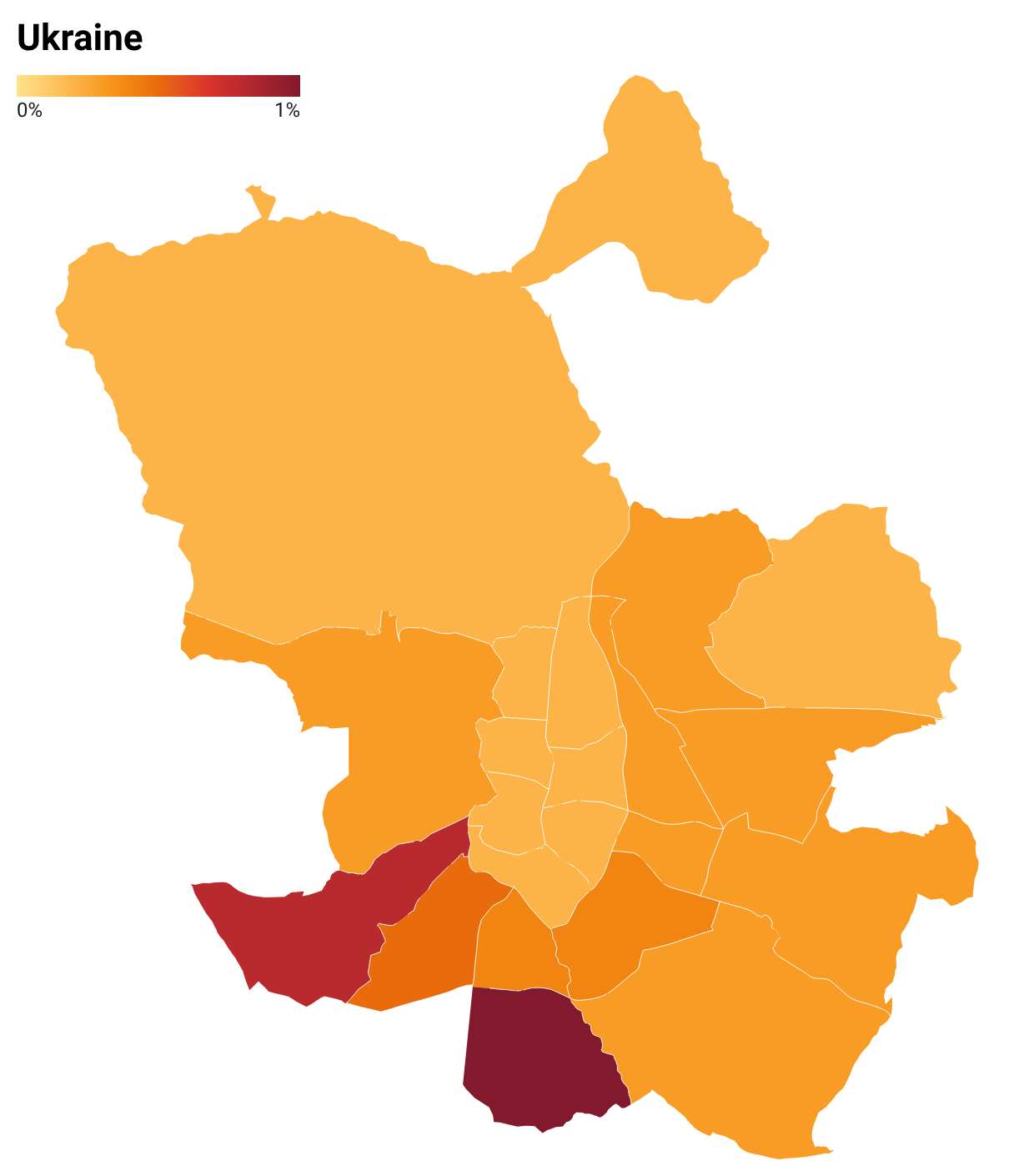
The main cause of this demographic dynamic is found in the fact that, unlike the constituents of the great majority of diasporas present in Madrid, whose general goal is to prosper economically, the circumstances whereby Venezuelan immigrants have left their country in recent years are more varied. While there are ample numbers of people pursuing better material living conditions for their families in Spain, there is also a considerable presence of middle- and upper-class Venezuelans seeking to embark upon a new life in a similar but much freer and more secure cultural and linguistic environment. Indeed, it may well be that large numbers of the latter group feature among the beneficiaries of the 243,223 authorised permissions to remain or reside granted by Spain for humanitarian reasons to Venezuelan citizens between 2019 and 2025, a much higher number than those given to citizens of any other country. It is thus a heterogeneous diaspora in terms of socioeconomic status, education and even age, in which three clearly differentiated sub-groups may be identified: ‘businesspeople who arrived with capital to invest, professionals with advanced academic training who had held positions of a certain level in Venezuela and, finally, people with fewer resources who have been obliged to insert themselves into low-qualified occupational niches’.[2] In this way, the aforementioned heterogeneity is reflected in the various places where they choose to live depending on their resources and social contexts, as happens with their Spanish counterparts.
So, despite the stereotype that paints the Barrio de Salamanca district as the epicentre of Venezuelan immigrants residing in Madrid, the truth is that this community is highly diverse, as shown by the fact that the four census areas with the greatest proportion of Venezuelan residents are located in four different districts (Barrio de Salamanca, incidentally, not figuring among them). The Caracas accent is undoubtedly heard more and more in Madrid, but there is no ‘Little Caracas’ in the city.
[1] One of the ways of calculating the residential segregation of a foreign community is the Index of Dissimilarity, which measures how such a community is distributed compared with the native population, its value varying between 0 (perfect integration) and 1 (complete segregation).
[2] S.S. Luiz et al. (2023), ‘La inmigración venezolana en la ciudad de Madrid’, Espacio Tiempo y Forma, Serie VI, Geografía, nr 16, p. 1-24.