
Key messages
- Africa Corps is reshaping the security order in the central Sahel by institutionalising Russia’s regime‑protection model and sidelining European actors. This paper examines how Moscow’s military, political and information tools are altering local security dynamics and what this means for EU and NATO interests on Europe’s southern flank.
- Russia’s primary goals are regime preservation and territorial control, not promoting good governance, inclusion or civilian protection. In the short term this strategy bolsters embattled juntas on the battlefield. But, over time, patterns of abuse, lack of accountability and violence fuel public resentment, facilitate recruitment by jihadist groups and erode trust in governmental institutions.
- Europe and NATO may not solve the root problems in the Sahel, but they can reduce the risk of being caught off guard by treating the region as part of Euro-Atlantic security and investing in tools like clear attribution, flexible partnerships and better EU-NATO coordination.
Analysis
Introduction
The security environment in the Sahel is changing rapidly. Military juntas in Mali, Burkina Faso and Niger have deepened ties with Moscow and expelled Western forces. Russian military personnel and equipment have become more visible, particularly in Mali. The transition from Wagner to Africa Corps marks a shift from a deniable proxy to an official arm of the Russian Ministry of Defence. The shift from a deniable proxy force to a formal part of the larger Russian military apparatus has significant consequences for Europe and Euro-Atlantic actors as instability increases migration, the threat of terrorism and strategic competition between various actors along the southern border of Europe.
This paper examines how Russia is making irregular power structures more permanent in the Sahel and altering local security dynamics. It also suggests steps that European and NATO actors can take to reduce strategic risks and protect their interests. Africa Corps is not just a new label, it is Russia’s main tool for building a lasting security system in the Sahel that sidelines European influence.
Institutionalising irregular power
During earlier operations in the Central African Republic and Mali, the Kremlin used Wagner to maintain plausible deniability, since Wagner was seen as a non-state actor. Africa Corps does not have this benefit. Led by Deputy Defence Minister Yunus-Bek Yevkurov and senior GRU officer Andrei Averyanov, Africa Corps operates within Russia’s official military and diplomatic structure, although its members are still referred to as ‘instructors’ or ‘security partners’.[1]
This shift to a formal structure changes Russia’s options. Wagner often operated with considerable authority and challenged the existing order, but Africa Corps aims to establish a lasting Russian presence. By moving from a private military group to an official Defence Ministry unit, the Kremlin seems ready to give up some deniability for a more stable and reliable way to exert influence as Western involvement decreases.
A new security order
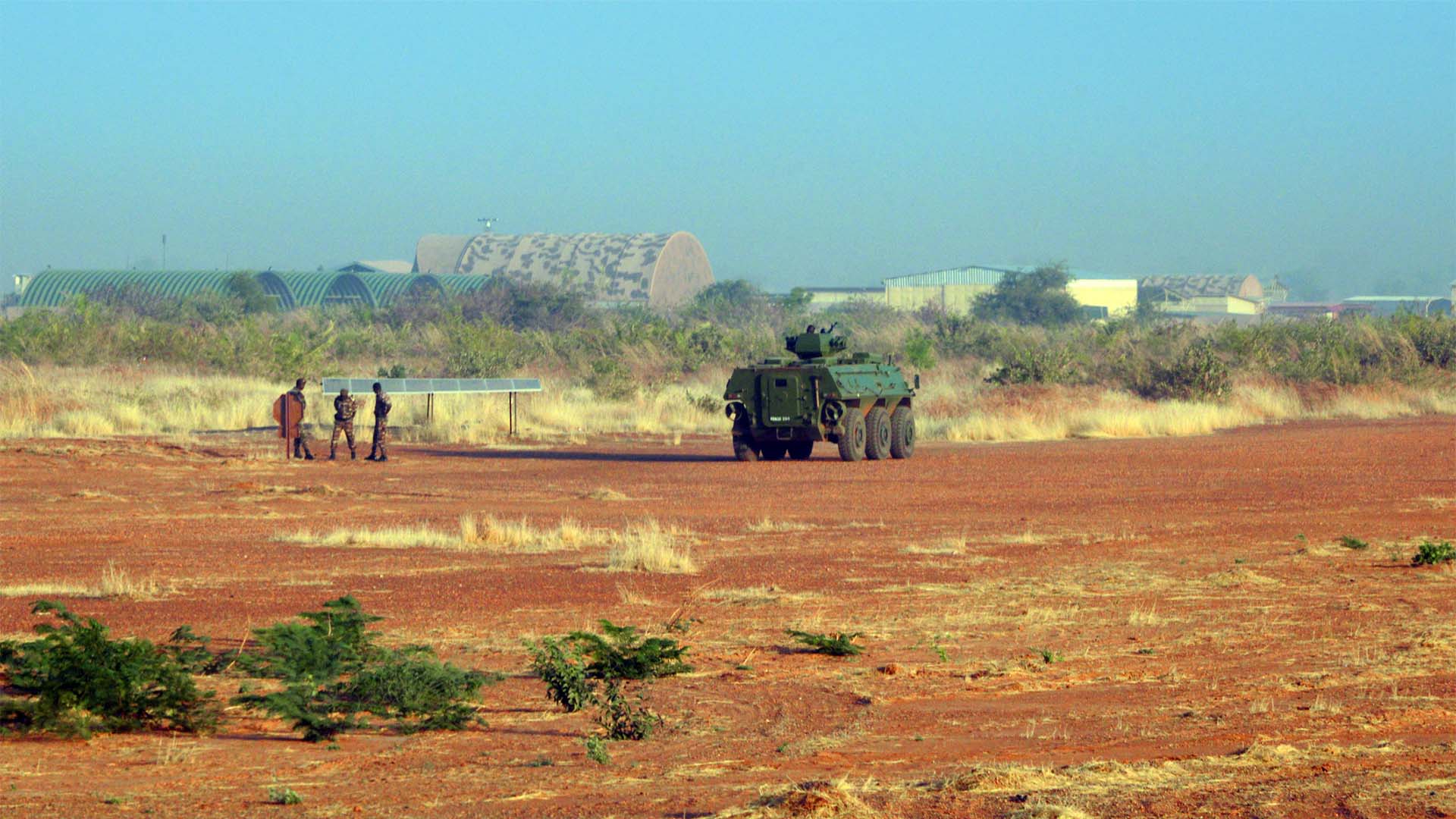
After Western missions departed, Russian personnel, equipment and advisers moved in to support the junta in Bamako and aid operations against insurgents. In Mali, Russian support mainly focuses on protecting the regime, helping on the battlefield and strengthening a small group of ruling elites, rather than protecting civilians or building institutions.
This model is being adopted by other countries, such as Burkina Faso and Niger, which have followed Mali’s example by increasing security cooperation through the Alliance of Sahel States and related organisations. In Niger, Africa Corps instructors arrived after the July 2023 military coup d’état, which also saw the withdrawal of Western military support. This demonstrated Moscow’s rapid response to political changes.
Similar dynamics are observable in Madagascar, where the October 2025 military coup was followed by closer security ties with Moscow and Russian military-technical assistance.[2] Whenever there are political crises in African countries, Russian takes the opportunity to offer military support, and elite partnerships, in exchange for strategic access and resource agreements.
Russia’s primary goals are regime preservation and territorial control, not promoting good governance or inclusion. Civilian protection is secondary. In the short term this strategy bolsters embattled juntas on the battlefield. But, over time, patterns of abuse, lack of accountability and violence fuel public resentment, facilitate recruitment by jihadist groups and erode trust in governmental institutions.
The Kidal events in late April 2026 exposed the fragility of the Malian junta’s gains. Tuareg rebels (FLA), allied with Jama’a Nusrat ul-Islam wa al-Muslimin (JNIM), al-Qaeda’s Sahel branch, reportedly used FPV drones against the Malian army and Africa Corps, took over Kidal and forced Russian troops to leave a city that Wagner had helped the junta capture in late 2023.[3] Due to Africa Corps’ constant presence near key areas, especially those rich in resources, the rest of the country is left vulnerable to jihadist groups.
The Kidal episode demonstrates that Russia’s regime-protection model faces significant challenges and remains fragile. Although Africa Corps is present in the Sahel, its forces are vulnerable and its assurances of stability are constrained. Acknowledging these limitations can help prevent both fatalism regarding Russian influence and complacency in the European response.
The information battlefield
Besides its military presence, Russia has an information campaign that aims at influencing perceptions about legitimacy and territorial jurisdiction. Russian-affiliated media, artificial intelligence bot farms and local journalists share narratives presenting France and the EU as neo-colonial powers and Russia as a potential partner that respects sovereignty and provides quick security assistance. This messaging contributes to ongoing frustrations with Western counter-terrorism efforts, civil casualties caused by them, and elite corruption.
This narrative lets local leaders frame working with Moscow to assert national sovereignty. It also helps them justify pushing out or sidelining European missions.
Disinformation campaigns have been made much more cost-effective and faster to produce due to advances in AI technology. Small teams can produce hundreds of posts per day in multiple languages –French, Arabic, English and local– while repackaging the same message with different images, taglines and cultural references.[4] Additionally, deepfake technology can produce audio and video that is difficult to distinguish between real and fake, which helps to disseminate false content that continues to create negative feelings towards the West and the United Nations.
These campaigns have a significant impact on European policy goals. Increasingly, people in Sahelian capitals see well-meaning help as foreign interference, making it harder to support good governance and human rights. The information campaign thus reinforces the military effort: Russia need not achieve victory on the ground if it can make European engagement politically untenable.
Why this matters for the EU and NATO
Instability in the Sahel, including irregular migration, terrorism, trafficking and unrest across North and West Africa, is a major challenge for Europe. Rising violence drives more migration and puts extra pressure on European borders. It also allows armed groups to find safe havens that could threaten other regions. European countries rely on the Sahel for minerals, energy and trade routes, but these interests are now more exposed to Russian influence over contracts, logistics and decisions.
Russia’s presence in the Sahel grants Moscow access to bases, airfields and supply points close to Europe’s southern border. Russia also supports diplomatic efforts, spreads disinformation and pushes for its interests in negotiations. Africa has become a competitive space between Russia and the West, with Moscow using military, information and security agreements to block European involvement. As a result, the EU’s influence has dropped, especially after mission withdrawals, damage to its reputation from accusations of neo-colonialism and disagreements over how to deal with governments that side with Moscow. Its members, including Spain, Italy, France and Portugal, face challenges such as terrorism, irregular migration and maritime insecurity. The Sahel exemplifies a region where instability and multiple threats intersect. Although NATO may not need a comprehensive strategy for the Sahel, Russia’s expanding presence complicates efforts to deter threats, maintain resilience and uphold Alliance cohesion within the Euro-Atlantic area.
Mauritania is NATO’s only formal partner in the Sahel and it cooperates with the EU as well as individual European states, especially Spain and France, on regional security. It is viewed as one of the most important effective actors in counterterrorism cases. But the strategy is heavily scrutinised by addressing symptoms rather than structural causes. A major challenge is that terrorism and migration are interconnected but not identical phenomena. The NATO Secretary General’s Special Representative for the Southern Neighbourhood and the EU Special Envoy for the Sahel offer avenues for engagement, but these roles are underused, especially since current strategies mainly target Russia. More regular and organised coordination between these positions could improve EU-NATO political ties in the region without much extra cost. Still, disagreements between NATO and EU members over working with Sahelian juntas and the level of political and military investment make strong EU-NATO cooperation difficult. The EU Security and Defence Initiative in Support of West African Countries of the Gulf of Guinea (EU SDI GoG) already supports coastal states in maritime security and capacity-building. Tying this initiative more clearly to concerns about Russian influence could help create a broader regional strategy.
Other external actors: China and Turkey in a new Sahel security marketplace
Along with Russia, China and Turkey are stepping in to fill the gap left by France and the EU in the Sahel and nearby regions. They offer different mixes of security, financial and political support to increasingly assertive governments.
Chinese investment
China has remained Africa’s top official bilateral creditor through the Belt and Road Initiative. As of 2025, US$61.2 billion worth of construction contracts have been attributed to China, including major development projects in Nigeria and the Republic of Congo.[5] Developing countries across the continent benefit from Chinese concessional loans, regular debt restructuring and various large-scale infrastructures, including roads, ports and telecommunication networks, all of which contribute to China’s dominance in the construction of infrastructure throughout Africa. Likewise, these commercial arrangements provide Beijing leverage through its state-owned firms, engineers and influence using debt-for-equity arrangements and Huawei-managed digital platforms. Additionally, the Sahel provides China with an attractive long-term partner for infrastructure and technology by positioning itself as an alternative to Europe. China has also expanded its security footprint, opening its first overseas military base in Djibouti in 2017 and relying on private military contractors and training programmes to deepen ties with African armed forces.[6] For the EU this still poses more of a domain‑awareness and resilience challenge expanding influence in the Sahel regarding human and institutional capacity building than an immediate kinetic threat.
Turkey’s cultural diplomacy
By providing humanitarian aid, Islamic cultural diplomacy and cost-effective military technology, Turkey has become a flexible security partner with African and Sahelian governments. By using these three tools, Turkey has positioned itself as a postcolonial Muslim state that does not impose as many political conditions as Western countries do. Ankara uses mosque restorations, scholarships, disaster relief and infrastructure investments in conjunction with military exports –Bayraktar TB2 drones– training teams, and maintenance facilities. The efforts of the Turkish Cooperation and Coordination Agency (TİKA), the President of the Presidency of Religious Affairs and the Maarif Foundation help to build lasting relationships between political leaders and religious communities. Turkey’s work with Somalia illustrates this model: it begun with humanitarian assistance and then expanded to infrastructure, military training and defence support.[7] Countries adjacent to the Sahel and the Gulf of Guinea also exhibit this pattern, with Turkey’s drones and military training contributing significantly to the development of their local security forces. Ankara’s ongoing support through maintenance, logistics, and intelligence increases its regional influence while building long-lasting partnerships without large numbers of troops and resource extraction.
While Russia’s support of regimes is part of a larger security picture, European and NATO approaches to the Sahel also must consider how China and Turkey affect the way local leaders view the threat and negotiation strategy.
Policy options for European and Euro-Atlantic actors
Europe cannot out-bid Russia on regime protection, but it can shape the environment. The goal is not to recreate a Western order that no longer exists, but to limit Russia’s strategic cost and keep options open.
From internal to shared intel
European and Euro-Atlantic members must go beyond generic requests for better intelligence in the Sahel. A joint EU-NATO cell could produce declassified reports on Russian deployments, civilian harm and jihadist adaptations in the central Sahel. This initiative could expand existing tools, such as the EU Satellite Centre and the cooperation of national intelligence agencies and open-source data analysis.
Financial backing for groups working such as investigative journalists, researchers or fact-checkers from African and European nations could be created. They would be used for tracking Africa Corps and other methods of influence. This could help strengthen coordinated reporting on informational competition in Europe and Africa.
Using the remaining economic leverage to widen Sahel countries’ choices
How well new regional institutions work in the Sahel depends on who joins them and what resources they have. EU countries should continue using financial and economic tools to provide the Sahel and its neighbours with more security options. Supporting groups like the African Union and the Economic Community of West African States can help make the region safer. European development policy should focus on key countries in West and Central Africa, where Russian influence is growing but not yet strong. Financial aid, trade benefits and targeted programmes should be tied to transparent security arrangements, including disclosure of any exclusive deals with external partners. Loans for better border management and stronger institutions can slowly make resource-for-security deals with Russia less attractive.
Turning EU-NATO coordination into concrete south-facing tasks
The EU-NATO focus in the Sahel should focus on concrete objectives, not just broad declarations. The Alliance’s 360-degree frame of reference can help identify and address instability in southern Europe and its interactions with other threats. In addition to contributing to current EU-NATO efforts, southern European nations such as Spain, Italy, Portugal and France can brief the North Atlantic Council and other relevant EU entities regularly on conditions in the Sahel. This would ensure that the region is kept at the forefront of security considerations without creating expectations of large-scale undertakings. Through coordinated communications and selected initiatives, EU-NATO responses can be more cohesive and neither institution will contribute to the Sahel’s over-militarisation.
Building coalitions of states uneasy with Russian dominance
EU member states should work with African and Gulf countries concerned about Russia’s security role in the Sahel. The goal is not to replace Moscow as primary patron but to create informal coalitions offering practical alternatives in training, logistics, financing and mediation support. Middle powers in Africa, such as Ghana, Senegal, Kenya or Morocco, along with selected Gulf states, can be supported to increase discrete security cooperation offers that will not require exchanging services and resources with the Gulf or other powers. European diplomacy should normalise the idea that excessive dependence on any one foreign security provider has long-term regional security implications.
Conclusions
Africa Corps is a key part of Russia’s plan to build influence using military force, political support and information campaigns. In the Sahel this strategy is already changing the security landscape, prioritising military governments over civilian safety. These changes have effects that reach into Europe’s southern region. Europe and NATO may not solve the root problems in the Sahel, but they can reduce the risk of being caught off guard by treating the region as part of Euro-Atlantic security and investing in tools like clear attribution, flexible partnerships and better EU-NATO coordination.
[1] Sebastian Seibt (2023), ‘Notorious Russian general, master spy duo organise in Africa after Prigozhin’s demise’, France 24, 20/IX/2023, paragraphs 1-5.
[2] ‘Russia sends weapons to Madagascar following military coup’, The Moscow Times, 22/XII/2025.
[3] ‘Rebel checkpoints reported around Mali’s capital, northern town seized’, Al Jazeera, 1/V/2026.
[4] Stanislav Vasyliuk (2026), ‘Russia’s information warfare in Africa: influence operations in the Sahel’, Journal of Strategic Security, vol. 19, nr 1, p. 78-92.
[5] C.N. Wang (2025), ‘China Belt and Road Initiative (BRI) Investment Report 2025 H1’, Green Finance & Development Center.
[6] Charlotte Gao (2017), ‘China officially sets up its first overseas base in Djibouti’, The Diplomat, 12/VII/2017.
[7] Margherita Rigoli (2024), ‘Turkey’s growing influence in Somalia’, NATO Defence College Foundation.