
In the heart of old Baghdad stands the Armenian Orthodox Church of Saint Mary the Virgin, built in 1639 in the Al-Midan area near the Al-Muradiyya Mosque. Both the church and the mosque emerged around the same time during the Ottoman-era reconstruction of Baghdad’s old city, when the foundations of its religious and civic life were being laid, closely interwoven. The church is said to house relics of the Forty Martyrs of Sebastea, Roman soldiers brutally executed for their faith. Centuries later, from Rome itself, a pope now speaks for ancient Christian communities in places like Iraq, and across the Middle East, that much of the MAGA-aligned right barely acknowledges.
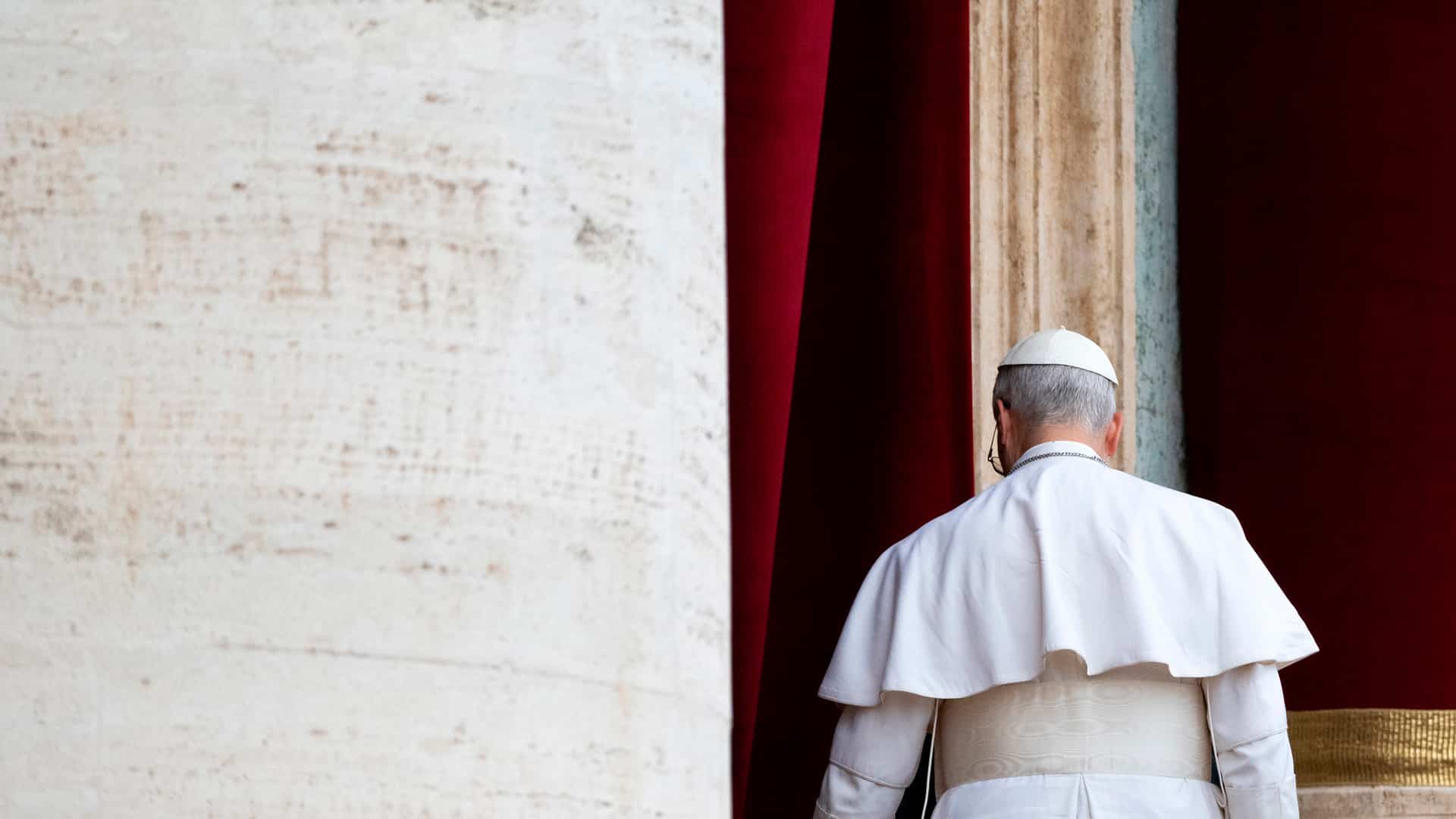
By portraying Pope Leo as a distant international figure meddling in worldly affairs, Trump places the pontiff in a familiar category for his supporters: the elite globalist who lectures ordinary people while ignoring their concerns.
Once a thriving centre of Armenian Christian life in Mesopotamia, the surrounding community has now dwindled to a remnant. Iraq’s Assyrian, Chaldean, Greek Orthodox and Melkite Christians face a similar fate. These are among the oldest Christian communities on earth, yet in much of the US political imagination they scarcely register. Across the border in Iran, small but historically rooted Christian communities, including Armenian and Chaldo-Assyrian Christians, continue to shrink and face growing marginalisation. That helps explain why US President Donald Trump’s latest attack on Pope Leo XIV is not merely a swipe at the Vatican but a signal to an evangelical base that recognises Christianity only when it reflects its own image.
Barely a week after attending the funeral of Pope Francis in Rome, Trump posted an AI-generated image of himself dressed as a pope, just days before the conclave convened in May 2025. More recently, he turned to Truth Social to post another AI image in which he appeared in Christ-like form, ‘administering an ethereal light to a stricken man’s head as translucent figures descended from the heavens’. Many dismissed these stunts as yet another juvenile provocation but following his latest public attack on Pope Leo XIV, it is clear that in Trump’s mind, no global figure, religious or political, should rival his dominance of the public stage.
At no other moment in history have two US citizens plausibly had the ability to shape the world. One holds military power; the other moral authority. The irony, of course, is that while the conclave elected a US citizen it was essentially the antithesis of Trump. Chicago-born Pope Leo has emerged as a universal pastor, speaking of peace, dignity and the human cost of war. At his inaugural Mass on 19 May, Vice-president J.D. Vance and Secretary of State Marco Rubio were amongst those in attendance, representing a White House whose politics stand in marked contrast to the new pontiff’s moral language. If the media images were a Renaissance painting, their presence at the momentous occasion would crystallise into a powerful tableau of a new reality, one in which another US citizen now commands global influence beyond Washington.
Trump’s subsequent attacks on the Pope are unlikely to be reactive, impulsive outbursts. An astute businessman and keen reader of public mood and temperament, he understands that confrontation within his political movement can serve as a source of energy. Sensational drama, however controversial or irreverent, keeps attention fixed on him and turns every disagreement into a test of allegiance.
By portraying Pope Leo as a distant international figure meddling in worldly affairs, Trump places the pontiff in a familiar category for his supporters: the elite globalist who lectures ordinary people while ignoring their concerns. By mocking calls for peace and restraint, Trump suggests that caution is weakness and that force is the true language of strength. And by targeting the head of the Roman Catholic Church, he taps into long-standing strains of evangelical suspicion towards Rome, where papal authority has often been seen with mistrust.
Viewed this way, the insult was aimed less at the Vatican than at the US electorate. Trump’s circle embodies a distinctly civilisational form of politics in which faith, identity and power are interlaced, some would argue drawing on an older imperial pattern in which theology and authority reinforced one another. Consider Marco Rubio’s rhetoric, which has at times invoked the language of a ‘clash of civilisations’, or Pete Hegseth’s Deus Vult tattoo, evoking Crusader-era imagery that has long been mobilised in anti-Muslim narratives. Such symbolism resonates with US evangelical political thought that interprets the Middle East through apocalyptic prophecy and strategic dominance rather than pluralistic coexistence. The result is a binary worldview, closer in spirit to ancient Manichaean divisions than to the ethical complexity of mainstream Christian thought.
By contrast, Pope Leo XIV takes a very different tone, focusing on human dignity, the protection of refugees, the suffering of war victims, environmental stewardship and peaceful coexistence. He continues the line of recent pontiffs who have drawn attention to the plight of Middle-Eastern Christians. Like Pope Francis before him, whose 2021 visit to Iraq during the pandemic made that message a defining theme, Pope Leo speaks of these communities not as relics of the past but as integral to the region’s pluralistic future. Pope Francis’s historic visit offered moral support to dwindling Christian communities and signalled concern for minorities whose survival depends on coexistence rather than political protection alone. He also inherited a papacy that under Pope Francis made Gaza, displacement and the suffering of Middle-Eastern civilians moral imperatives, extending the Church’s gaze far beyond the culture wars of US politics. According to UNESCO, among the nearly 200 sites in Gaza damaged or destroyed during the war, is the Byzantine Church of Jabalia, built in 444 and destroyed in October 2023. The same concern was evident in Pope Francis’s meeting with Grand Ayatollah Ali al-Sistani in Najaf, where two religious leaders embodied a moral authority that Iraq’s fractured state failed to match. Trump’s brand of geopolitics asks who wins, while Pope Leo’s geo-theology asks what remains of our shared humanity after the contest for power is over.
For the ancient Christian communities of the Middle East, that question is hardly polemical. Their existence complicates every oversimplified map of ‘East’ and ‘West’ and their survival rarely fits into modern political narratives or agendas. Many in the US speak of defending Christianity while overlooking Christians whose roots in the region predate the US itself by centuries. In US political discourse, these indigenous communities are erased when the region is reduced to shorthand as ‘the Islamic world’. They are not guests in the Middle East. They are among its indigenous peoples. They were there before the flags now ruling over them.
Successive upheavals in places like Iraq have irrevocably destabilised ancient Christian life, especially in the years following the US-led invasion. Sectarian violence, kidnappings, church bombings and mass emigration steadily hollowed out communities that had endured for centuries. The rise of ISIS in Mosul and the Nineveh Plains aggravated the rupture, accelerating what many describe as an existential collapse of presence. What had survived empires, dynasties and centuries of regional change was, in a remarkably short span, pushed to the edge of disappearance. The war was sold to the US public in the language of democracy and liberation, but for many Christians on the ground it translated into displacement, fear and erasure.
Trump’s attacks on Pope Leo are, in essence, a collision between two visions of the US. What makes Pope Leo’s discourse so jarring to Trump and his cohorts is his categorical rejection of the familiar language of simplification and exceptionalism. Like the child who says the emperor has no clothes, Pope Leo exposes the gap between US rhetoric and lived reality in places like Iraq, Syria, Lebanon and the Holy Land. He gives voice to a region that is no longer buying the ‘made in America’ narrative of itself. If the West cannot recognise Christianity unless it speaks in its own accent, it may one day find that some of the oldest Christian voices on earth have fallen silent.