
Spain is particularly exposed to the impact of artificial intelligence (AI), not so much because it is a laggard in tech but because it has high unemployment (10%) and thus job displacement caused by AI would need to be cushioned by more active labour market policies, such as upskilling and reskilling, in order not to swell the number of jobless. Some estimates suggest that up to half of administrative jobs, many in the public sector, and 28% of total employment is at high risk of job displacement.
The country’s digital infrastructure is generally more advanced than the EU average, with higher coverage rates in most categories (see Figure 1). The contribution to the EU’s Digital Decade is ambitious, with 13 national targets, 12 of which are aligned with the EU 2030 targets. The 5G spectrum assignment in pioneer bands, identified as critical for the roll-out of 5G technology, is particularly strong. A weak area, however, is the relatively small number of ICT specialists.
Figure 1. Observed key performance indicators as a percentage of the EU 2030 targets
| Coverage of the EU target | Distance from the EU target | |
|---|---|---|
| Very high capacity network coverage | 95 | 5 |
| Fibre to the premises coverage | 95 | 5 |
| Overall 5G coverage | 96 | 4 |
| Digital interaction intelligence | 82 | 18 |
| Cloud | 44 | 56 |
| Data analytics | 55 | 45 |
| AI | 15 | 85 |
| ICT | 47 | 53 |
| Digital public services citizens | 89 | 11 |
| Digital public services businesses | 85 | 15 |
| Access to eHealth records | 88 | 12 |
An INE survey showed that 21% of companies were using AI systems in 2025 (compared with 13% in 2022), fewer than Germany but more than Italy. The TIC sector is the one with the greatest use, as one would expect (59% in 2025; 42% in 2022), followed by industry (18%; 10%) and construction (11%; 7%). The adoption rate is higher in large, productive and young companies, where AI is mainly used to optimise internal processes and for marketing but less for task automation and innovation. While the use of basic tools such as websites and social media is widespread among SMEs, uptake of more productivity-enhancing technologies such as enterprise resource planning, cloud computing, and AI is low.
The evidence so far from the latest labour force survey shows that AI is not destroying jobs in net terms so far, but it is having a particular impact on employing the youngest workers. Companies are not laying off their junior staff; they have simply stopped hiring them. If this trend takes hold, the long-term consequences could be more far-reaching than a mere reduction in employment, as the loss of access to entry-level positions means that young people will not gain the experience that would enable them to benefit from working alongside AI throughout their careers.
AI offers significant potential to improve the delivery of public services by reducing bureaucratic and paperwork burdens and improving interactions with citizens, as well as feeding data and evidence into the policymaking process.According to a task-based economic model applied to 1.4 million public administration workers by the think tank EsadeEcPol:
- For 67% of them, between 10% and half of their tasks could be enhanced by generative AI.
- For 9%,the potential is even higher as AI incorporation could benefit over half of their tasks.
- The remaining 24% display low potential due to the non-replaceable nature of their tasks.
In the healthcare sector, AI systems could significantly reduce the administrative burden on professionals. According to a government study, the use of AI in primary care could free up professionals to handle up to five additional consultations a day, whilst in specialist care it could reduce waiting lists by 22 days. In banking, the Bank of Spain is integrating machine learning into supervisory functions, allowing it to also address, like other central banks, a growing number of complex and novel issues, drive productivity and contain costs. The big banks Santander, BBVA and Caixabank are AI-native.
The government is allocating just over one-quarter of the funds from its recovery and resilience plan (€163 billion), financed by Next Generation EU, to digital. Spain was the first EU country (in 2023) to create a dedicated agency for the supervision of AI (AESIA), based in A Coruña. It also pioneered the first AI Regulatory Sandbox, a controlled environment where high-risk AI projects are being tested to ensure they meet the EU AI Act requirements before they hit the market. The National AI Strategy (ENIA) is the backbone of government policy. It focuses on funding AI Chairs at universities to bridge academia and industry and an initiative to develop a massive large language model to avoid ‘cultural bias’ from US-centric models. Spain is positioning itself as the ‘guardian’ of the Spanish-speaking AI world, providing the infrastructure for Latin America to avoid ‘digital colonialism’. Meanwhile, the PERTE Chip programme aims to reduce dependence on foreign semiconductors.
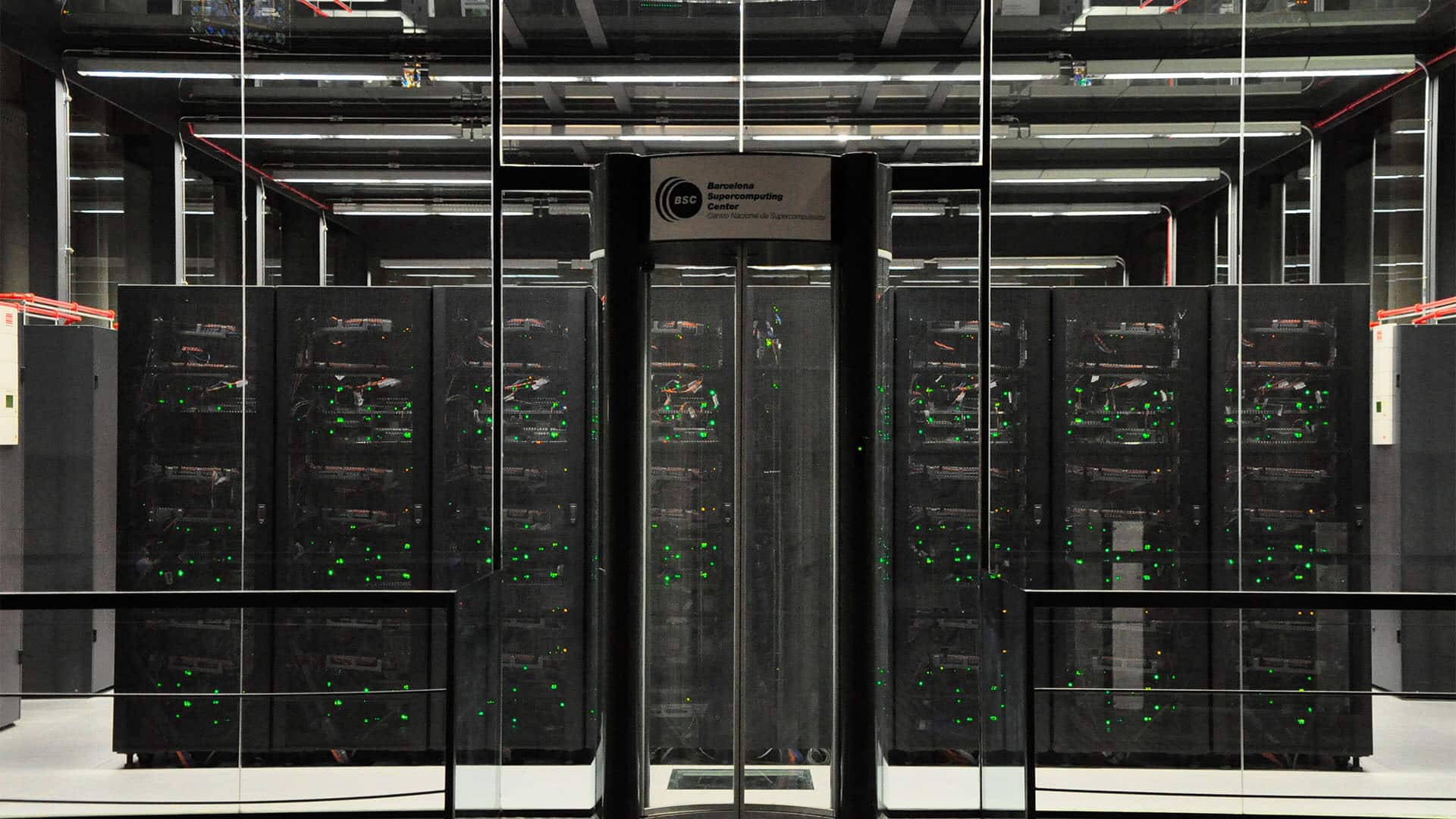
There are regional hubs. The Madrid AI Cluster connects start-ups with corporate investment, the Barcelona Supercomputing Centre upgraded MareNostrum 5 earlier this year, making it one of the world’s most powerful ‘AI factories’ for training models, and ‘Malaga Valley’ in Andalusia hosts international tech firms such as Google and Vodafone. Spain is one of the most active EU countries in implementing the European Declaration on Digital Rights and Principles.
R&D investment, however, remains low (see Figure 2). Insufficient investment can lead to slower advancements in AI, as progress can stall due to a lack of resources.
Figure 2. R&D investment, 2024 (% of GDP)
| % of GDP | |
|---|---|
| Germany | 3.13 |
| EU average | 2.24 |
| France | 2.18 |
| Spain | 1.50 |
| Italy | 1.38 |
AI could help Spain deal with its demographic challenge –a very low fertility rate and a fast-ageing population– by improving productivity but, as the OECD notes, ‘it is by no means a substitute or silver bullet for a lack of human workers’.