
Across Iraqi Kurdistan, anxiety is growing as an expanding regional confrontation edges closer to Kurdish territory. The region has reportedly been targeted by over 630 drones and missiles since the start of the war waged by Israel and the US against Iran, killing at least 14 people and wounding 93 others.
For many Kurds, the spectacle of war descending from the sky in 2026 evokes a sense of déjà vu.
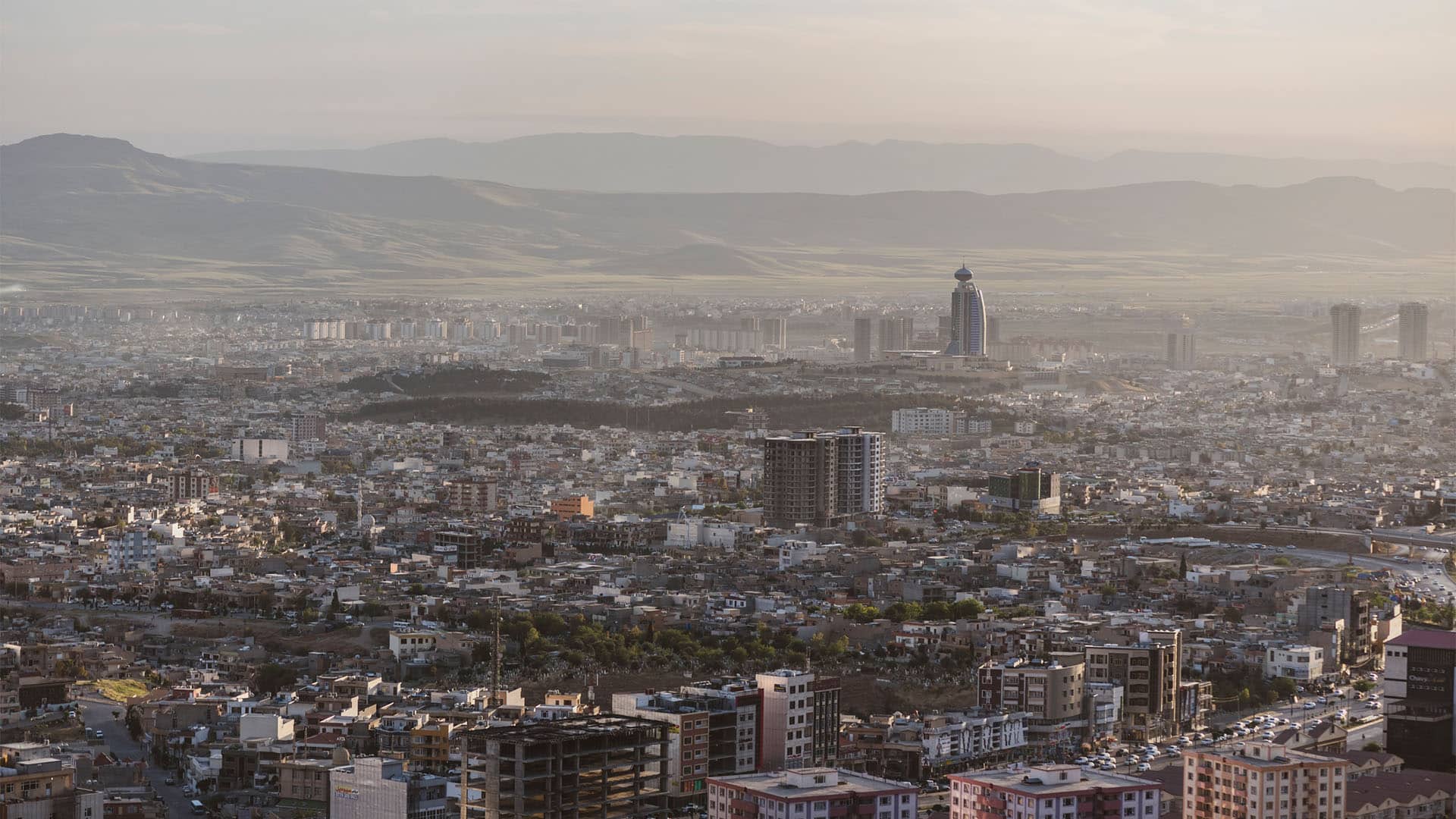
Night skies over Sulaymaniyah are filled with the buzz of drones and the distant thud of incoming missiles. Across Iraqi Kurdistan, anxiety is growing as an expanding regional confrontation edges closer to Kurdish territory. The region has reportedly been targeted by over 630 drones and missiles since the start of the war waged by Israel and the US against Iran, killing at least 14 people and wounding 93 others. US President Donald Trump initially called on Kurdish fighters to enter Iran in support of the campaign, but later appeared to back away from the proposal. The idea was met with near universal opposition from Kurdish leaders. Kurds are not ‘guns for hire’, warned Shanaz Ibrahim Ahmed, Iraq’s first lady and an ethnic Kurd. They know all too well how this story tends to end. Close to 100 years ago, the Kurds were betrayed after siding with the British to fight the Ottoman Empire during World War I.
For many Kurds, the spectacle of war descending from the sky in 2026 evokes a sense of déjà vu. It was in 1926 when British aircraft pounded the city to crush the Kurdish leader Sheikh Mahmud Barzinji after he declared himself king and pursued an independent Kurdistan. Just as the British promised the Kurds a state carved out of the Ottoman Empire, 100 years later, the US has asked the Kurds to carve out a state from the Islamic Republic of Iran, whose borders were inherited from the last Persian Empire, the Qajars. Then as now, the Kurds found themselves caught between the ambitions of larger powers.
The earlier bombardment came at a moment when the political map of the Middle East was still being violently redrawn. After the collapse of the Ottoman Empire, nationalist movements swept the region, encouraged in part by US President Woodrow Wilson’s rhetoric that all nations had a right to self-determination. In this atmosphere, the Kurdish religious and tribal leader Sheikh Mahmud Barzinji declared himself King of Kurdistan in 1922, claiming Sulaymaniyah and the surrounding areas. No stranger to pragmatic alliances, Barzinji had fought alongside the British against the Ottomans during the war, only to turn against them when Kurdish hopes for statehood began to fade. London responded with a new instrument of imperial control. Winston Churchill, the Pete Hegseth of his day as UK War Secretary, ordered the Royal Air Force to conduct ‘aerial policing’ of the Iraq mandate. Between 1923 and 1924 British aircraft repeatedly bombed Sulaymaniyah and nearby villages. The campaign succeeded and Barzinji’s short-lived kingdom collapsed. The man who had dared to crown himself king was eventually forced into exile and political obscurity.
The fall of Barzinji’s kingdom was the result of diplomatic horse-trading conducted far from the mountains of Kurdistan. In the immediate aftermath of the World War I, Kurdish aspirations had briefly gained recognition on the international stage. The Treaty of Sèvres in 1920 raised the possibility of a Kurdish state carved out of the ruins of the Ottoman Empire. But three years later, the Treaty of Lausanne erased those provisions as the victorious powers settled on a different map of the Middle East. The oil-rich Mosul Vilayet north of Baghdad was incorporated into the new, British-backed state of Iraq, leaving the Kurds scattered across four countries –Iraq, Turkey, Iran and Syria–. For Barzinji and many others it was a betrayal of wartime assurances. As he reportedly told the British officials: ‘You promised us a Kurdistan’.
The final contours of this new order were settled a few years later. In 1926 the League of Nations confirmed that the Mosul Vilayet would remain part of the newly created state of Iraq, effectively fixing the borders that still define much of today’s Iraqi Kurdistan. The monarchy installed in Baghdad under Faisal I operated under heavy British influence, and Kurdish hopes for full-fledged independence gave way to a struggle for autonomy within the Iraqi state. Over subsequent decades, Kurdish politics settled into an unfortunate pattern of uprisings, negotiations and bitter compromises with Baghdad. In the 1960s the Iraqi Air Force repeatedly bombarded villages in and around Sulaymaniyah during successive rebellions, further embedding the memory of aerial attack into the Kurdish psyche. Through it all, Sulaymaniyah retained its place as the symbolic heart of Kurdish nationalism. The memory of Sheikh Mahmud Barzinji still lingers in the city today, where a large portrait of the would-be king stands near the entrance to the bazaar.
A century on, the Kurds of northern Iraq now enjoy a degree of autonomy their predecessors could scarcely have imagined in the 1920s. Since the 1991 Gulf War and the establishment of a Western-enforced no-fly zone, the Kurdistan Regional Government (KRG) has built many of the trappings of self-rule, including its own parliament and the Peshmerga security forces. Yet that autonomy remains fragile. Economic disputes with Iraq’s central government, rivalries between Kurdish political factions and unrelenting pressure from neighbouring powers limit how far it can extend. Geography still dictates the region’s fate. Sitting between Iran, Turkey, Syria and Iraq, Kurds are repeatedly drawn into conflicts they neither seek nor support. The recent abandonment of Kurdish forces in north-eastern Syria by the US, which cleared the way for a Turkish offensive, was yet another illustration of how alliances forged in war can dissolve quickly when larger strategic calculations shift.
The danger today is that history may be repeating a familiar pattern. Yesterday’s aerial bombardments have given way to drones. For Kurdish fighters accustomed to guerrilla warfare in the mountains, even their asymmetric tactics offer little protection against the precision and reach of unmanned aircraft. In 2020 the war between Armenia and Azerbaijan showed how quickly drones can dismantle a conventional army, striking armour, artillery and troop positions with devastating accuracy.
In the confrontation between Iran and the Israel-US alliance, Iraqi Kurdistan risks once again becoming a staging ground in someone else’s war. A century ago, Kurdish fighters allied with British forces during the final years of World War I, spurred by the promise of a state of their own. In recent years they have fought alongside Western coalitions, this time against the Islamic State. Yet strategic partnerships forged in moments of crisis often weaken or dissolve once the larger geopolitical objectives of outside powers are achieved. For the Kurds, the hum of aircraft overhead is not just the sound of war. It is the echo of a century of unfinished history.